


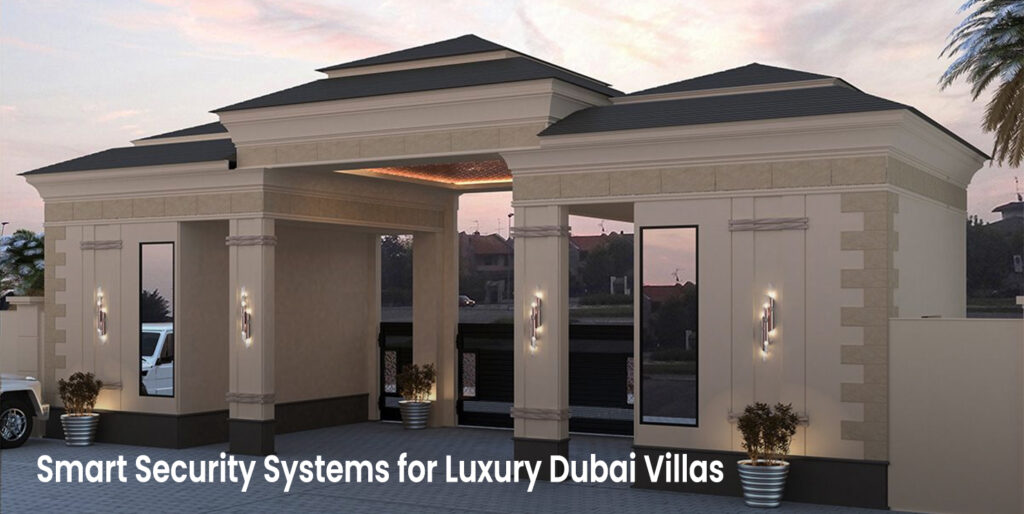
Dubai’s luxury residential landscape is experiencing a significant transformation in 2026. Advanced artificial intelligence and automation have shifted from premium options to expected features in high-end real estate.
In elite villa markets across Palm Jumeirah, Emirates Hills, and Dubai Hills Estate, smart home systems are increasingly treated as fundamental infrastructure rather than optional upgrades.
Industry professionals observe that automated climate control and security systems have become as standard as high-quality finishes in luxury villas—reflecting a broader shift toward treating home intelligence as essential infrastructure. The UAE smart home market shows a strong growth trajectory, with technology integration becoming standard practice in premium residential development.
For high-net-worth individuals, a well-designed smart villa offers sophisticated automation capable of adapting to habits, managing environmental challenges, and reducing operational complexity—though still requiring thoughtful programming and periodic adjustment rather than functioning as fully autonomous systems.
Cognitive Climate Orchestration: Managing the Arid Environment
In Dubai’s extreme climate where external temperatures frequently exceed 45°C during summer months, climate control represents the most critical smart home function.
Premium villas have moved beyond simple programmable thermostats to predictive, learning-based climate management systems that optimize HVAC performance.
Predictive HVAC Adaptation and Machine Learning
Contemporary climate automation employs adaptive algorithms that observe villa thermal behavior in relation to resident occupancy patterns. Rather than maintaining static setpoints, advanced thermostats adjust temperatures based on learned schedules and occupancy prediction—though effectiveness depends heavily on proper initial programming and periodic refinement.
These systems analyze data from IoT sensor networks monitoring temperature, humidity, and air quality. By understanding the thermal characteristics of large villas, properly configured systems can initiate cooling cycles during off-peak hours or gradually ramp up cooling, reducing peak loads on the DEWA grid.
Well-optimized installations in properly insulated villas can achieve energy reductions of 15-25%, with some exceptional cases reaching 30% when combined with comprehensive envelope improvements.
Integration with real-time weather data from the National Center of Meteorology allows villas to respond to sandstorms or heatwaves, adjusting cooling strategies or closing external air intakes preventing fine desert dust ingress.
In luxury villas housing art collections or sensitive instruments like pianos, precision humidity control ensures stable environments—though this requires dedicated equipment and regular calibration.
Automated Solar Shading and Thermal Regulation
Smart shades and motorized blinds integrate into comprehensive climate strategies when properly configured. Systems from established providers like Lutron and Somfy utilize solar tracking algorithms calculating sun angles based on villa geographic coordinates and facade orientation.
At peak solar intensity, automated shades close reducing thermal heat gain, functioning as passive cooling layers that reduce HVAC workload. During cooler periods or when sun angles are favorable, systems can adjust blind slats maximizing natural light without glare, reducing artificial lighting requirements.
Integrated with environmental sensors, these shading systems can deploy exterior shutters during high-wind events or sandstorms protecting glazing and maintaining interior cleanliness—though reliability depends on proper installation and regular maintenance.
Linguistic Adaptation: Voice AI and Cultural Integration
A notable characteristic of Dubai’s smart villas is deployment of voice assistants supporting both Arabic and English. In a multicultural environment where language mixing is common, standard single-language AI assistants have shown limitations.
By 2026, improvements in Natural Language Processing from providers like Speechmatics have introduced models handling Arabic dialects and English with improved accuracy. Current-generation systems achieve Word Error Rates around 6-8% on mixed-speech scenarios, representing significant improvement over earlier systems—though still requiring careful pronunciation and sometimes repetition for complex commands.
For villa residents, this enables commands mixing languages, though comprehension reliability varies based on accent, dialect, and command complexity.
Integration can extend to culturally relevant automation—some systems can synchronize with local prayer times, adjusting audio volume or lighting in designated zones, though this requires specific programming during installation.
While surveys suggest strong preference for regionally adapted AI assistants, deployment remains inconsistent across installations, with effectiveness varying based on system quality and integration depth.
The Sentinel Residence: AI Surveillance and Biometric Security
Security remains top priority for Dubai’s ultra-high-net-worth residents, driving adoption of advanced surveillance integrating AI-enhanced cameras, biometric access, and comprehensive monitoring systems.
AI-Powered Threat Detection
Premium villas utilize AI-enhanced CCTV cameras from providers like Hikvision and Dahua, moving beyond simple recording to real-time object classification.
These systems employ deep learning algorithms categorizing detected objects—distinguishing between people, vehicles, and animals—though accuracy varies based on lighting conditions, camera positioning, and environmental factors.
This classification helps reduce false alarms common in desert environments where sand movement or shifting shadows trigger conventional motion sensors.
Biometric Access and Perimeter Security
Biometric access systems at primary entry points recognize residents through facial recognition or fingerprint scanning, automatically opening barriers and adjusting lighting upon verified entry.
State-of-the-art perimeter sensors protect large villa plots, with some systems offering integration with community security networks and Dubai Police protocols.
For traveling residents, biometric systems allow temporary access credentials for guests and service staff through centralized management apps.
Security automation extends to internal spaces, with biometric access securing private zones—home offices, vaults, wine cellars—ensuring controlled access with comprehensive logging.
However, these systems require professional installation, regular maintenance, and careful privacy consideration regarding data storage and access.
The Physical Infrastructure: Pre-Wiring for Future Bandwidth
A genuinely future-ready villa requires robust foundational infrastructure. Forward-thinking developers and homeowners now prioritize comprehensive data cabling anticipating next decade’s bandwidth requirements, treating network infrastructure as critical as electrical and plumbing systems.
Ethernet Standards and Network Architecture
While Wi-Fi remains essential for mobile devices, premium Dubai villas increasingly incorporate wired Gigabit Ethernet backbones. High-definition streaming, multi-room audio, and real-time security processing benefit from wired connections providing reliable bandwidth without wireless congestion issues.
Cat6A and Cat7 are commonly used for villa-wide wiring, offering 10 Gbps speeds and 600-1000 MHz bandwidth sufficient for current and near-term applications.
For core infrastructure links—connections between network equipment and media centers—some installations employ Category 8 supporting up to 40 Gbps, providing substantial headroom for future requirements, though most current applications don’t yet utilize this capacity.
Modern network switches increasingly provide Power over Ethernet capability, powering cameras and some motorized devices directly through data cables.
Advanced Presence Detection
To achieve cleaner aesthetics, sensors are increasingly concealed within architectural elements. A notable advancement is adoption of millimeter-wave (mmWave) presence detection supplementing or replacing traditional Passive Infrared sensors in premium installations.
Traditional PIR sensors detect heat and movement, sometimes causing lights to turn off when residents remain still. mmWave radar detects micro-movements including breathing, enabling presence detection even when occupants are stationary.
Advanced integrators use hybrid approaches combining PIR for instant triggers with mmWave for sustained presence confirmation. Because mmWave signals penetrate common building materials, sensors can be completely concealed, though this requires careful positioning to avoid false positives from adjacent spaces.
The Wellness Ecosystem: Personal Health Tracking Integration
An emerging smart home application is health monitoring integration. In collaboration with Dubai Health Authority, some premium villas are incorporating medical-grade monitoring, though this remains early-stage rather than widespread practice.
DHA Smart Homecare Integration
The DHA’s Smart Homecare Kit initiative represents efforts toward residential health monitoring integration. Devices like non-contact thermometers and pulse oximeters can connect via IoT to health record systems, though full-scale deployment remains limited to pilot programs and selected installations rather than market-wide standard.
Where implemented, vital signs can be recorded for remote monitoring and trend analysis by healthcare providers.
AI Smart Mirrors and Biometric Monitoring
Smart mirrors incorporating biometric sensing are appearing in high-end installations. These devices can estimate heart rate and respiratory rate through optical analysis of facial color changes—remote photoplethysmography—though accuracy varies with lighting conditions and requires controlled environments for reliable measurements.
Some systems incorporate basic wellness suggestions based on detected stress indicators, though emotion detection capabilities remain experimental with inconsistent real-world performance.
Interoperability and the Matter Standard
The smart home industry is transitioning from fragmented proprietary ecosystems toward universal interoperability standards. The Matter protocol has gained significant industry support, providing common language for devices from Apple, Amazon, Google, Samsung, and other major manufacturers.
Thread Networking and Local Processing
Matter typically utilizes Thread as underlying mesh network protocol—designed specifically for IoT devices like sensors and locks. Unlike Wi-Fi which can become congested with numerous devices, Thread creates self-healing mesh networks where devices remain responsive even if individual nodes fail.
Matter specifications emphasize local processing where possible, allowing basic home automation to continue functioning even during internet outages—valuable for high-security villas.
However, Matter adoption is still progressing. Many existing devices use legacy protocols like Zigbee and Z-Wave, requiring multi-protocol hubs for comprehensive integration.
Professional installers increasingly specify systems supporting multiple standards to ensure compatibility with both current devices and future Matter-certified products.
Aesthetic Integration and Invisible Technology
In luxury markets, smart home quality is increasingly measured by how seamlessly technology disappears into architecture. Current design trends favor “soft minimalism”—warm neutrals and natural materials rather than stark high-tech aesthetics.
Hidden Audio and Minimalist Controls
In-wall and in-ceiling speakers provide distributed audio without visible hardware, though installation requires advance planning during construction or renovation.
Physical control panels are being minimized in favor of voice control and smartphone interfaces. When physical controls are necessary, they’re increasingly specified in premium materials like stone, metal, or leather matching interior finishes rather than plastic.
High-end lighting systems from providers like Lutron enable “architectural” approaches where illumination highlights textures and artwork rather than simply providing functional light, though achieving these results requires collaboration between lighting designers, architects, and technology integrators during design phases.
Professional Integration Platforms
While consumer smart home systems have improved substantially, typical luxury Dubai villa scale (often exceeding 10,000 square feet) with hundreds of controlled devices usually necessitates professional-grade platforms.
Crestron is known for enterprise-level reliability managing complex installations. Savant offers user-friendly interfaces appealing to residents who want customization control. Control4 provides extensive device compatibility important for integrating diverse equipment.
Economic Valuation: The ROI of Smart Integration
Advanced automation integration affects Dubai real estate economics, though impact varies based on implementation quality and buyer priorities. Well-executed smart home systems can contribute to property value, though quantifying exact premiums is complex.
Property Value and Rental Premium
Market data suggests technology-enabled properties in Dubai’s luxury segment may command premiums in the 5-12% range depending on system sophistication, brand recognition, and execution quality—though this varies significantly based on specific installations and buyer priorities.
For luxury rental markets, such as Palm Jumeirah villas, comprehensive smart features can improve rental appeal and potentially support higher rates, though premium depends on target tenant demographics.
Energy Efficiency and Maintenance Benefits
High-bandwidth infrastructure pre-wiring and modular automation frameworks help maintain property technological relevance, potentially reducing future upgrade costs.
Energy optimization through smart HVAC can deliver operational cost reductions of 15-25% in well-designed systems within properly insulated villas, though actual savings depend heavily on building envelope quality, system configuration, and usage patterns.
Predictive maintenance capabilities identifying potential equipment issues before failure can reduce emergency repair costs and extend equipment lifespan.
Market Evolution
By 2026, basic smart lighting, climate control, and security have become expected features in new luxury construction, with developers like AYS Developers and DAMAC including these as standard rather than optional upgrades.
Premium differentiation now comes from implementation quality, system integration depth, and advanced features like health monitoring or comprehensive automation.
Best Renovation Company in Dubai: Engineering Smart Integration
Creating genuinely future-ready villas requires comprehensive engineering integrating network infrastructure, climate control, security systems, and user interfaces into cohesive ecosystems that will remain functional and relevant for years. This demands expertise beyond consumer device installation.
Wahat Babil's Integrated Approach
Since 2006, Wahat Babil has specialized in engineering-focused renovations treating smart home integration as fundamental infrastructure requiring proper planning, professional installation, and ongoing support rather than afterthought technology additions.
Our comprehensive services include network infrastructure engineering with Cat6A/Cat7/Cat8 structured cabling and Power over Ethernet systems; climate orchestration integrating predictive HVAC with automated shading and humidity control; comprehensive security systems with AI-enhanced surveillance and biometric access; voice control deployment with regional language support; wellness technology integration where appropriate; aesthetic integration ensuring technology remains unobtrusive.
We also provide complete villa renovation incorporating smart infrastructure from initial planning through final commissioning with regulatory compliance.
What Distinguishes Our Work
What sets our approach apart is integrated expertise across disciplines. Our network specialists coordinate with HVAC engineers ensuring climate systems communicate properly with automation infrastructure.
Our security integrators work with access control specialists ensuring biometric systems integrate seamlessly with overall automation. Our technology specialists collaborate with interior designers ensuring equipment placement maintains architectural integrity.
Systems function reliably because we engineer them holistically from project inception rather than assembling disconnected products with uncertain compatibility.
Contact Wahat Babil for consultation about smart home systems engineered for reliable long-term performance in Dubai’s demanding environment.