


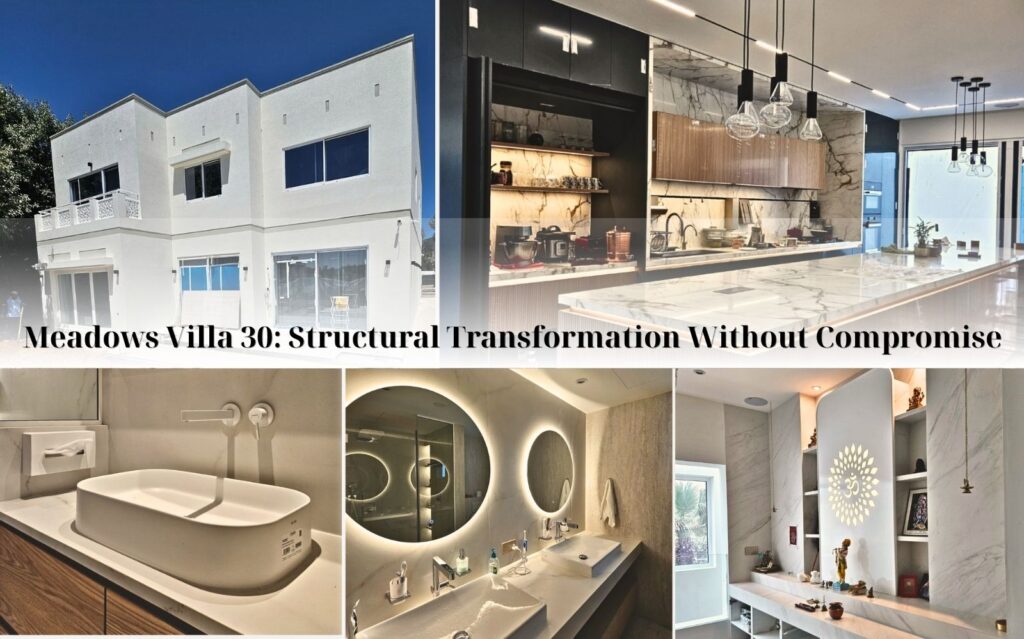
⏱ Duration: 6 months (June – December 2024)
✅ NOC Status: Dubai Municipality + EMAAR community approval secured before works commenced
🔧 Key Technical Breakthrough: Steel-frame load redistribution used to eliminate interior RCC columns — no soffits, no compromises on ceiling height
🏗 Scope: Full renovation + 3-side structural extension + swimming pool + complete custom joinery
By Mr. Salih, Civil engineer, Wahat Babil
What the Owners Asked For
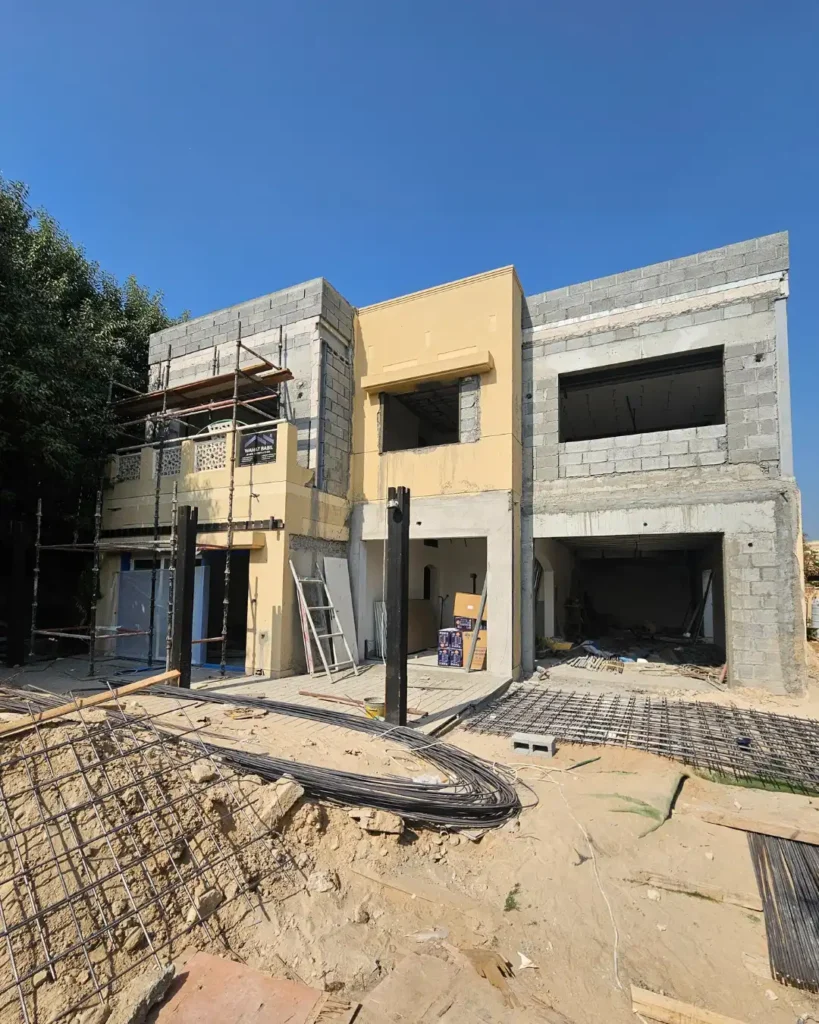
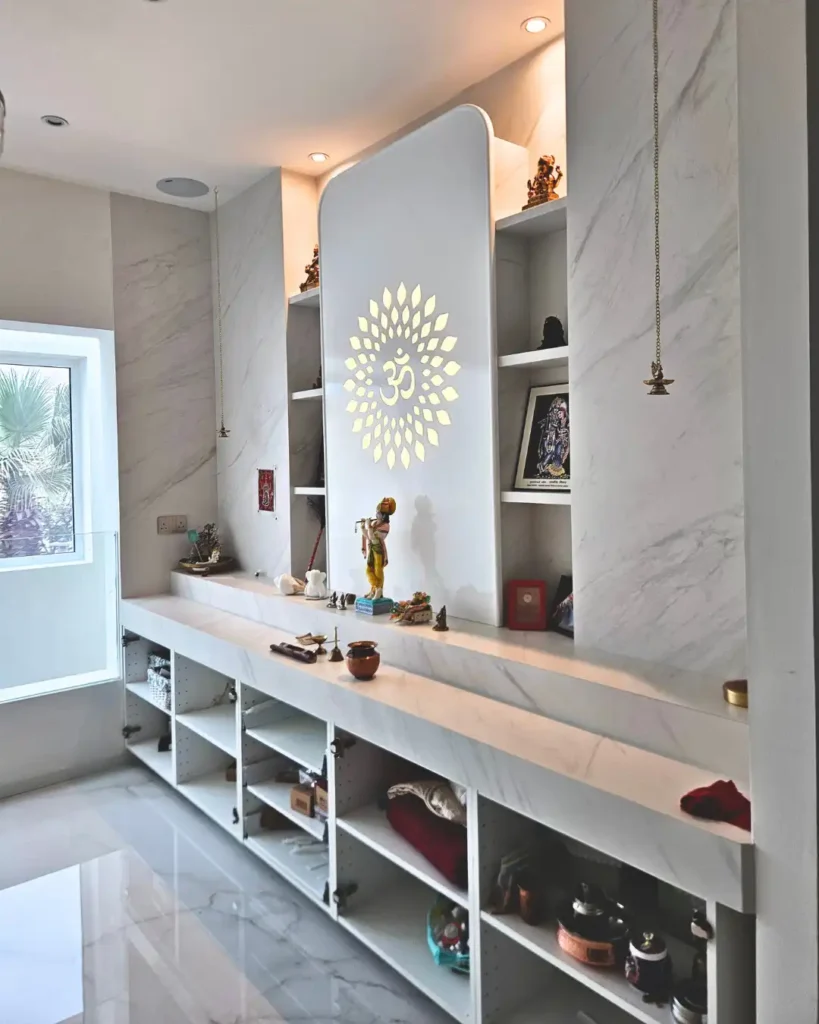
When we first sat down with the owners of Villa 30 in early June 2024, they had a clear picture of what they wanted: take out the ground floor columns, get the ceilings as high as possible, extend the building on the front, both sides, and the rear, add a swimming pool, replace the AC with something that works with higher ceilings, fit the whole villa with custom joinery, and replace every door and window. All of it in six months.
We went through each item against the actual EMAAR allocation data for this specific plot in Meadows 5 — not the generic community guidelines, but the permitted envelope, setback distances, and plot coverage limits for Street 7, Villa 30. We confirmed what was buildable, agreed the scope, and engaged EMAAR community management and Dubai Municipality in parallel before any drawings were finalised. The NOC was in hand before we put a single tool on site.
Taking Out the Ground Floor Columns
The Meadows villa type carries its upper floor slab on interior RCC columns. They sit in the middle of the ground floor living area, and in Villa 30 they were exactly where the owners wanted open space.
Our civil engineer assessed each column individually — measured the load it was carrying, checked the slab span it was supporting, and confirmed what the consequences of removal would be without a structural alternative in place. The answer was straightforward: the loads had to go somewhere else before the columns came out.
We designed a steel frame using hot-rolled UC-section beams. These were anchored at the perimeter walls and tied into the new extension foundations, creating a load path that bypassed the interior columns entirely. Every weld and bearing point was fabricated to the structural drawings, installed, and inspected before demolition of the original RCC columns began. The columns came out only after the steel was carrying the load above them.
The ground floor is now column-free. There are no soffits hiding beams, no columns repositioned to less obvious spots. The structural solution is in the perimeter and the steel — not in the ceiling.
Getting the Ceilings as High as Possible With a Full AC System
Pushing ceiling height to the maximum the slab-to-slab dimension allows creates a problem for air conditioning. A standard ducted system needs 300–400mm of void above the ceiling board for supply ducts and return air. Once you raise the finished ceiling close to the structural soffit, that void disappears. The standard workaround is a soffit — a dropped ceiling section that houses the ductwork. It works, but it brings the ceiling back down in the areas that matter most.
We specified slim-duct VRF indoor units with a total installed height of 178mm. These fit within the available void without requiring a soffit, and they terminate through flush linear slot grilles that sit level with the ceiling board. There is no visible mechanical equipment in any of the ceiling planes.
The system was sized for the villa’s actual cooling load, including the increased solar exposure on the new glazed elevations introduced by the three-side extension. During commissioning in July and August 2024, it held a consistent 22°C across all floors against an external temperature of over 43°C.
The Three-Side Extension and the Pool
Extending front, sides, and rear simultaneously pushes right up against EMAAR’s plot coverage and setback limits. We pulled the specific allocation data for this plot, confirmed the maximum permitted envelope on every boundary, and locked the extension dimensions to those limits before the architects drew anything. The drawings submitted to EMAAR and Dubai Municipality were based on confirmed figures, not estimates. We submitted to both bodies at the same time rather than waiting for one approval before starting the next. That parallel submission process saved three weeks compared to a sequential approach.
The NOC was received, the drawings were approved, and we mobilised in June 2024 with no outstanding regulatory items.
The swimming pool followed the same pre-approval process. We identified the existing utility routes below the rear garden, confirmed the required separation distances from the boundary wall, and had municipality approval for the pool shell design before excavation started. We opened the pool dig during the structural phase and ran the civil works concurrently with the extension. The pool shell was complete and waterproofed before the interior finishing trades arrived on site.
Running Six Trades at Once Without Delays
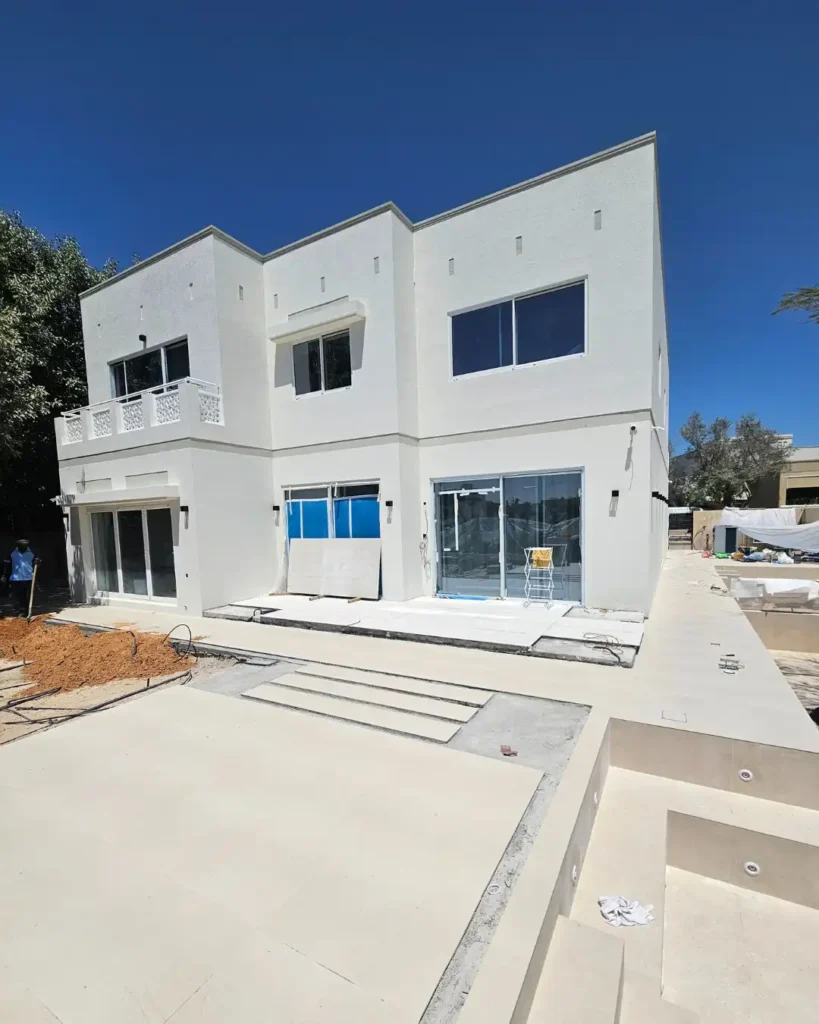
The Meadows has defined working hours, noise windows, and a prescribed waste removal schedule. We built the entire programme around these from the start.
We split the villa into five work zones running in parallel: structural interior, extension civil works, pool civil works, upper-floor MEP, and bathroom wet works. Each zone had its own team and its own daily targets. The sequencing was set up so no zone was waiting on another.
Morning hours went to structural steel, demolition, and concrete pours in the extension. Midday was for precision work — electrical terminations, slim-duct installations, and plumbing connections. Afternoon was HVAC testing, ductwork pressure checks, and pool waterproofing. The final working window each day went to painting, joinery installation, and snagging.
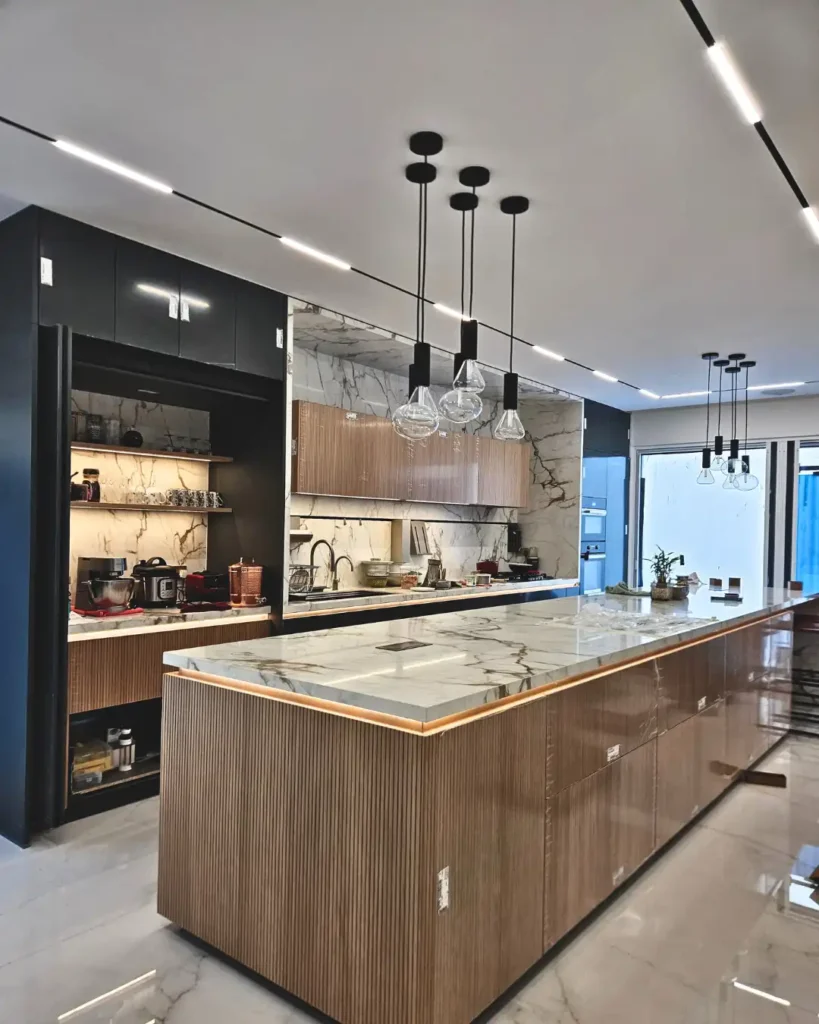
All custom joinery — every kitchen unit, wardrobe, and built-in — was manufactured in our workshop during months two and three, while structural and MEP work was live on site. When the joinery team arrived in month five, installation took eight days. Nothing was measured or adjusted on site because the fabrication drawings were produced from site measurements taken during the structural phase.
What We Checked Before Handing Over
- ✅ Steel load transfer verified by independent structural engineer — written sign-off on file
- ✅ RCC column removal points inspected — no slab cracking recorded at 6-month mark
- ✅ VRF system commissioned — all zones reaching set-point within 8 minutes from cold start at 43°C ambient
- ✅ Bathroom tanking membranes flood-tested for 24 hours — zero moisture at blockwork base before tiling
- ✅ Extension dimensions checked against approved NOC drawings — zero deviation on all setbacks
- ✅ Pool pump operational, water chemistry balanced, LED lighting tested
- ✅ All joinery soft-close mechanisms checked across every unit — zero adjustments outstanding
- ✅ Electrical DB load-balanced, RCD-tested, and labelled by circuit
- ✅ Thermally broken window frame seals inspected — no condensation at perimeter during AC commissioning
- ✅ EMAAR site officer final inspection completed — sign-off received December 2024
Handed over on schedule. December 2024.
Thinking About a Structural Renovation in The Meadows?
The first step is checking what your plot allocation actually permits. We pull the specific data for your villa before we quote anything.
Contact Wahat Babil to discuss your project.