


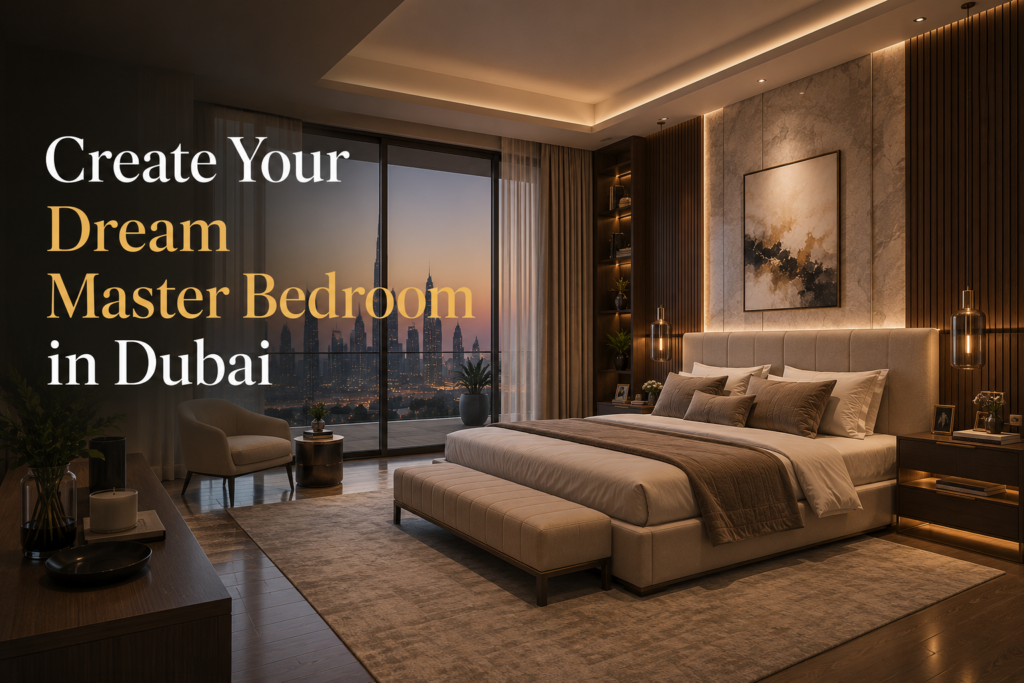
Your bedroom should be the most restorative space in your home yet many Dubai homeowners struggle to sleep despite luxurious furnishings. Between long working hours, international travel schedules, and a climate that fights you at every turn, the master bedroom often becomes an afterthought in the race to finish the “showpiece” rooms of a villa.
That’s a mistake. The master bedroom is used more than any other room in the house eight or more hours a day and it has an outsized effect on health, mood, and productivity. Dubai adds its own layer of difficulty: extreme heat, intense light, humidity, and noise all conspire against a good night’s sleep, regardless of how much was spent on furnishings.
This guide walks through what actually transforms a master bedroom into a true sanctuarya space that’s beautiful, comfortable, and genuinely supports better sleep. At Wahat Babil, we’ve renovated master bedrooms across Dubai’s premium communities, and the pattern is always the same: the renovations that succeed are the ones that treat sleep as the design brief, not an afterthought.
Why Master Bedroom Design Matters in Dubai
Sleep is foundational to health; it affects cognitive function, weight regulation, immune strength, and mood regulation. Poor sleep, which is common among Dubai’s residents, has real consequences. A master bedroom renovation is best understood as a health investment, not just an aesthetic upgrade.
Dubai’s climate creates specific obstacles that generic bedroom design simply doesn’t account for:
- Heat: Summer temperatures regularly exceed 45°C outdoors, and heat radiates through exterior walls long after sunset. A west-facing bedroom can absorb six to eight hours of intense afternoon sun, leaving the room running hot well into the night and forcing the AC to work overtime.
- Light: Dubai’s brightness doesn’t switch off at night street lighting, neighboring buildings, and reflected glare all find their way into bedrooms. This ambient light interferes with melatonin production, the hormone that governs sleep onset.
- Humidity: Coastal properties can see humidity climb to 60–90% in the early morning hours, producing sticky, uncomfortable sleeping conditions and encouraging dust mite activity, a common allergy trigger.
- Noise: Neighbors, AC compressors, and traffic all disrupt the sleep cycle, preventing the body from reaching deep sleep phases. For reference, bedrooms are typically recommended to stay near NC 30 on the noise criterion scale.
- Air quality: Dust, salt air, and pollution especially in coastal villas contribute to respiratory irritation and allergies that further disrupt rest.
A well-designed master bedroom in Dubai addresses each of these factors directly, rather than leaving them to the air conditioning system to solve alone.
Climate Control for Sleeping Comfort
Temperature
The ideal sleeping temperature sits between 16–19°C, which is genuinely difficult to maintain in Dubai without deliberate design.
- The most effective solution is a dedicated HVAC zone for the master bedroom, paired with a smart thermostat that lowers the temperature automatically at bedtime.
- Motorized thermal-blocking shades can cut heat gain by 30–40%, and additional wall or ceiling insulation reduces heat transfer from adjacent spaces.
- A properly zoned bedroom can reduce AC runtime by 20–30%, improving comfort while lowering energy costs.
Humidity
The target for sleeping comfort is 40–55% relative humidity well below Dubai’s morning average, which often exceeds 80%. Dehumidifier integration removes excess moisture without over-cooling the room, while proper ventilation prevents stale air from building up. Breathable wall treatments also help by preventing moisture from becoming trapped behind finishes.
Air quality
HEPA filtration removes dust, salt particles, and pollution, which matters enormously for anyone with allergies or sensitivities. An ERV (energy recovery ventilator) system brings in filtered outdoor air without overwhelming the cooling load of fresh air without the energy penalty.
Many Dubai homeowners don’t realize that bedroom climate control is foundational to sleep quality. At Wahat Babil, we design HVAC systems specifically for restorative sleep, not just temperature, but humidity and air quality control working together.
Lighting Design for Sleep Support
Light governs the body’s circadian rhythm more than most homeowners realize. Blue light in the morning suppresses melatonin and promotes alertness useful for waking up, but disruptive if it’s leaking into the room at night. Warm light in the evening does the opposite, encouraging melatonin production and preparing the body for sleep.
The practical answer is layered, time-aware lighting:
- Daytime: Light-filtering (not blackout) shades that soften Dubai’s intense sun without cutting off natural light entirely, supporting circadian alignment during waking hours.
- Evening: A shift to warm, dim lighting smart systems can automatically transition to 2700K tones, with a target of under 50 lux in the final hour before bed.
- Sleeping: Motorized blackout shades providing a genuinely zero-light environment, which noticeably improves melatonin production and deep sleep.
A few common mistakes are worth avoiding: bright overhead lighting in the evening, phone or tablet use before bed, and a television positioned opposite the bed. In their place, favor warm accent lighting for ambiance, reading lights kept separate from ambient fixtures, and automated systems that respond to time of day. Properly designed bedroom lighting alone can meaningfully improve sleep quality.
Acoustic Privacy and Noise Isolation
Noise disrupts sleep architecture; light sleep, deep sleep, and REM cycles are all sensitive to interruption from a partner’s schedule, neighborhood activity, or the AC compressor cycling on and off. Chronic disruption from noise shows up the next day as fatigue, reduced focus, and mood changes.
A few construction and design choices make the biggest difference:
- Wall isolation: STC 50+ rated walls, often achieved with double drywall and a damping compound, can reduce sound transmission by more than half.
- Window treatment: Acoustic glazing reduces external noise by 20–30 dB and improves thermal insulation at the same time.
- AC noise control: Properly sized HVAC equipment with silencers and vibration isolation, designed toward an NC 25 target, prevents the system itself from becoming the disturbance.
- Ceiling treatment: Acoustic plaster reduces echo and reverberation, softening the room’s overall acoustic character.
It’s worth noting that complete silence isn’t always the goal; some homeowners find total isolation claustrophobic, and a white noise machine can be a simpler solution for masking a partner’s differing schedule. A comfortable target is around 35–40 decibels, roughly the level of a quiet library.
We design master bedrooms with acoustic isolation as a core feature, not an afterthought. It’s one of the renovations that most reliably turns a bedroom from disruptive to genuinely restful especially where partners keep different schedules.
Material Selection for Durability and Wellness
- Flooring should avoid cold tile that feels uncomfortable underfoot and carpet that traps dust. Warm, durable materials such as wood or engineered wood, layered with an area rug, strike the right balance and in Dubai, materials also need to resist heat, humidity, and salt air over time.
- Wall finishes should lean toward matte rather than high-gloss, which creates glare under bedroom lighting. Soft blues, greens, and warm whites support a calm atmosphere; bold, saturated colors tend to overstimulate.
- Window treatments work best as motorized shades offering both blackout capability for sleep and sheer options for daytime light filtering, alongside the thermal benefits already noted.
- Ventilation materials matter more than most homeowners expect: ERV systems with HEPA filters, low-VOC paints and finishes that won’t off-gas overnight, and breathable wall treatments that resist mold and moisture.
Furniture and Layout Strategy
Positioning matters as much as material choice. Keep the bed away from windows to avoid drafts and noise, and away from direct AC vents or air return paths. Nightstands with lamps reduce reliance on harsh overhead lighting, and a small seating area for reading helps separate “rest” from “sleep” psychologically.
Storage should minimize clutter, since a cluttered room works against the sense of calm the space is meant to provide. Where possible, avoid placing the bed against a wall shared with a noisy neighboring space.
Your master bedroom should look like a sanctuary, not a storage room—thoughtful furniture placement supports both the aesthetics and the function of the space.
Budget and Timeline
| Renovation Level | Budget Range | Timeline | What's Included |
|---|---|---|---|
| Refresh | AED 30,000–50,000 | 4–6 weeks | Paint, new lighting, motorized shades, updated fixtures |
| Moderate | AED 50,000–100,000 | 8–12 weeks | Above, plus flooring, acoustic treatment, HVAC zone control |
| Complete | AED 100,000–200,000+ | 12–18 weeks | Above, plus structural changes, custom millwork, premium finishes |
The highest-value elements are typically HVAC zoning, acoustic construction, and motorized shading—each delivers a noticeable, immediate improvement in sleep quality. Homeowners should also budget for less visible costs such as ERV installation and structural work required for acoustic isolation, and plan for two to three additional weeks if structural changes require authority approvals.
How Wahat Babil Designs Master Bedrooms
At Wahat Babil, we approach master bedroom renovation differently from other spaces in the home. Rather than starting with aesthetics, we start with sleep science. Every decision climate control, lighting, acoustic isolation, materials is evaluated for how it affects sleep quality first.
Our process typically follows five steps:
- Assessing the bedroom’s specific light exposure, noise sources, and current climate performance.
- Optimizing HVAC for a dedicated sleeping zone with humidity control and quiet fresh-air supply.
- Designing layered lighting that supports circadian rhythm from morning through night.
- Building acoustic isolation into walls, windows, and HVAC design.
- Selecting Dubai-appropriate, breathable materials that hold up to the climate over time.
Clients consistently report improved sleep after these renovations better rest translates into better health, productivity, and mood, which is exactly why we treat the master bedroom as one of the highest-value spaces in a villa. We’ve completed renovations across Dubai’s premium communities, including Arabian Ranches, Emirates Living, and Palm Jumeirah, each customized to that home’s specific climate and neighborhood conditions.
If you’re considering a master bedroom renovation, we’d welcome the opportunity to assess your specific needs and discuss how we can help create your ideal sleep sanctuary.
Conclusion
A master bedroom renovation is a significant health investment, not just an aesthetic one. Sleep quality depends on climate control, lighting, acoustic isolation, and material choices working together all of which are achievable through thoughtful renovation. Dubai’s climate demands a specialized approach; generic bedroom design simply doesn’t hold up here.
Your master bedroom should be the most restorative space in your home. When designed thoughtfully, it becomes an investment in your health, wellness, and quality of life. At Wahat Babil, we specialize in creating master bedrooms that are beautiful, functional, and genuinely support better sleep we’d be honored to help you create your sanctuary.