


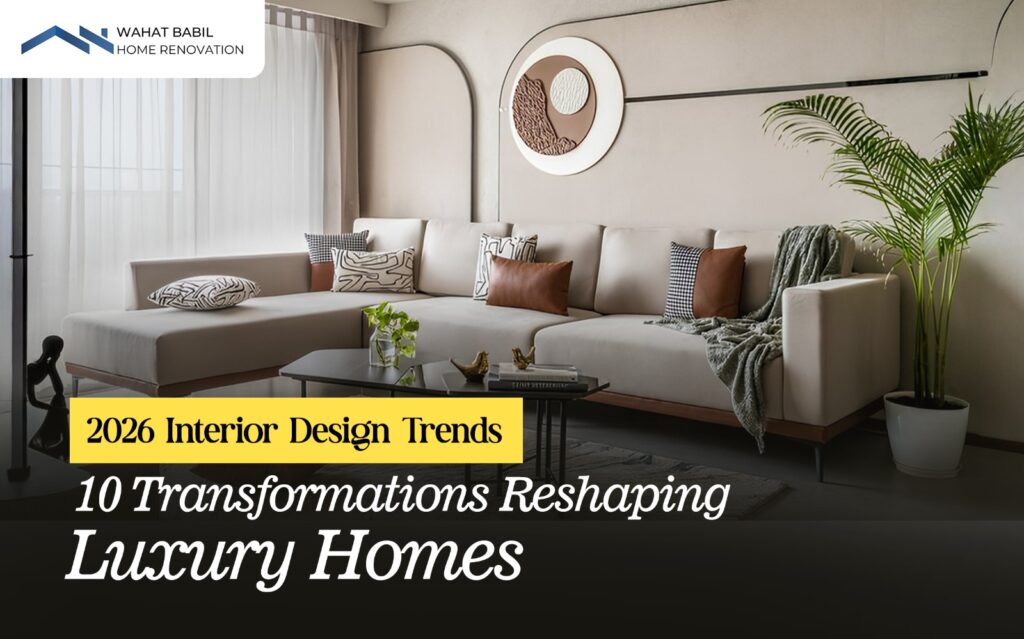
The Evolution of Luxury Living
Luxury interior design in 2026 represents a dramatic departure from previous decades’ aesthetic priorities. The shift moves beyond surface-level trends toward fundamental transformations in how we conceptualize and inhabit our homes.
Dubai’s luxury villa market, characterized by discerning clients with international exposure and elevated expectations, leads this evolution. Today’s homeowners seek spaces that balance cutting-edge technology with organic comfort, bold personal expression with timeless sophistication, and cultural heritage with contemporary innovation.
This article explores the ten defining trends reshaping luxury homes in 2026—movements that reflect not just changing tastes, but evolving values around sustainability, wellness, personalization, and the fundamental purpose of residential spaces.
1. Quiet Luxury and Sustainable Craft
The Shift from Obvious to Subtle
2026 marks a significant departure from obvious opulence toward sophisticated understatement. “Quiet luxury” emphasizes quality craftsmanship and heritage materials over flashy displays of wealth.
Key Characteristics:
- Artisan-made finishes showcasing human craft
- Heritage materials with documented provenance
- Sustainable sourcing and local production
- Timeless design transcending trend cycles
- Quality over quantity in furnishings
Why This Matters in Dubai
For Dubai’s luxury market, this represents maturation from dramatic showiness to refined sophistication. Discerning clients now view design as long-term investment rather than status display.
Implementation Examples:
- Hand-finished plaster walls instead of mass-produced wallpaper
- Locally-sourced stone with unique regional characteristics
- Custom furniture by known artisans
- Natural fabrics from heritage textile producers
- Handcrafted lighting fixtures
2: Tech-Integrated Sensory Interiors
Solving Tech Fatigue
The convergence of smart home systems with organic, tactile materials addresses the growing “tech fatigue” phenomenon. 2026 design creates spaces where technology enhances life without dominating aesthetics.
Integration Principles:
- Smart systems operate invisibly without visual intrusion
- Natural materials provide tactile comfort and psychological grounding
- Technology enhances functionality without announcing presence
- Single-app control integrates multiple systems seamlessly
Dubai Climate Applications
This approach particularly resonates in Dubai’s environment where smart HVAC, irrigation, and cooling systems require seamless integration with luxury aesthetics.
Smart-Organic Balance:
The Technology Layer seamlessly integrates modern conveniences like hidden motorized blinds, invisible speakers, concealed climate control, and smart lighting with automated systems for a sophisticated environment. This is balanced by the Organic Counter-Balance, featuring natural linen curtains, acoustic wood panels, and living plant walls that promote a sense of calm and natural well-being. The entire system is intuitively controlled through handcrafted control panels that work in concert with natural daylight optimization to blend technology and nature.
3: Color as Architectural Statement
Beyond Neutral Minimalism
2026 moves decisively beyond the white/gray minimalist palette toward bold, intentional color stories that define spaces architecturally rather than decoratively.
Trending Color Directions:
- Electric blues and teals paired with warm terracottas
- Dusty jewel tones (emerald, sapphire, amethyst) replacing harsh brights
- Warm, saturated earth tones reflecting biophilic influences
- Cultural color integration respecting Arabic and Islamic traditions
Strategic Color Application
Rather than accent walls, 2026 uses color structurally—entire rooms in single bold hues, architectural elements in contrasting tones, or gradient transitions between connected spaces.
Dubai-Specific Palettes:
- Desert-inspired ochres and burnt siennas
- Persian-influenced blues and teals
- Gold and bronze accents honoring regional heritage
- Deep greens connecting to palm landscapes
4: Maximalist Layering Returns
Rejecting Sterile Minimalism
The pendulum swings away from minimalism’s cold aesthetic toward rich, layered environments reflecting inhabitants’ personalities and histories.
Maximalist Principles:
- Multi-layered patterns and textures
- Eclectic, personality-driven decor
- Curated collections reflecting family heritage
- Mix-and-match principles creating visual richness
- Spaces that tell personal stories
Sophisticated Maximalism
2026’s maximalism differs from cluttered excess. It’s intentional layering of quality pieces creating visual interest while maintaining sophisticated cohesion.
Implementation Strategy:
- Start with neutral architectural base
- Layer patterns in complementary color families
- Mix eras and styles with unifying thread
- Balance busy areas with visual rest zones
- Display meaningful collections purposefully
5: Dedicated Wellness Spaces
Home as Health Sanctuary
2026 luxury villas increasingly feature purpose-built wellness rooms addressing the high-stress lifestyles of Dubai’s professional class.
Wellness Room Types:
Meditation Chambers:
- Climate-controlled environment
- Acoustic isolation from household noise
- Circadian lighting supporting mindfulness
- Natural materials and biophilic elements
Private Spa Facilities:
- Sauna and steam rooms
- Hydrotherapy features
- Air purification systems
- Professional-grade fitness equipment
Breathing Rooms:
- Enhanced air filtration removing pollutants
- Humidity control optimizing respiratory comfort
- Specialized lighting supporting relaxation
- Minimal furnishing reducing visual stress
Investment in Wellbeing
These dedicated spaces reflect recognition that true luxury includes health infrastructure supporting physical and mental wellness within the home.
6: Biophilic Architecture
Nature as Structure, Not Decoration
2026 moves beyond decorative plants toward structural integration of natural elements throughout architectural design.
Structural Biophilic Elements:
- Living walls with integrated irrigation and drainage
- Water features with circulation and filtration systems
- Native plant selections adapted to Dubai’s climate
- Natural ventilation optimization
- Maximized daylight penetration through strategic glazing
Climate-Adapted Implementation
Dubai’s harsh environment requires specialized biophilic approaches:
- Shade-loving plants for covered areas
- Drought-resistant species for outdoor zones
- Misting systems supporting delicate greenery
- UV-protective glazing preventing plant damage
- Automated irrigation responding to environmental conditions
Benefits Beyond Aesthetics:
- Air purification and oxygen production
- Humidity regulation in dry climate
- Temperature moderation through evapotranspiration
- Psychological stress reduction
- Connection to nature despite urban setting
7: Acoustic Design as Aesthetic Element
Making Sound Treatment Beautiful
Rather than hiding acoustic solutions, 2026 design celebrates sound management as architectural feature enhancing both function and aesthetics.
Acoustic-Aesthetic Integration:
- Decorative acoustic panels in custom fabrics and patterns
- Sound-absorbing architectural elements (slat walls, textured ceilings)
- Material selection prioritizing audio clarity alongside beauty
- Multi-sensory experiences balancing visual and auditory comfort
Why This Matters
Dubai’s hard-surface luxury finishes (marble, tile, glass) create challenging acoustic environments. Making sound treatment beautiful solves functional problems without compromising visual excellence.
Application Examples:
- Fabric-wrapped panels matching room color schemes
- Wooden slat systems combining style with absorption
- Textured plaster walls diffusing sound waves
- Strategic upholstery placement reducing echo
8: Cultural Design Integration
Honoring Heritage Through Modern Expression
2026 emphasizes personalized aesthetics honoring inhabitants’ cultural heritage rather than following generic international styles.
Cultural Integration Approaches:
Arabic Geometric Patterns:
- Traditional motifs in modern materials (laser-cut metal, etched glass)
- Pattern integration into functional elements (screens, lighting)
- Respectful interpretation maintaining cultural significance
Culturally-Informed Spatial Planning:
- Kitchen design supporting extended family cooking traditions
- Prayer room integration as primary architectural element
- Separation of public and private zones honoring cultural norms
- Guest areas sized for traditional hospitality practices
Material Storytelling:
- Family narrative reflected in material selection
- Heritage textiles incorporated into modern furnishings
- Regional craftsmanship celebrated in custom elements
- Personal collections displayed as design features
Dubai’s Multicultural Context
The city’s diverse population creates unique opportunities for cultural fusion—blending Arabic, Asian, European, and international influences into cohesive personal expressions.
9: Flexible, Future-Proof Design
Designing for Life’s Evolution
Recognizing that family needs change dramatically over time, 2026 incorporates flexible systems allowing spatial reconfiguration without major renovation.
Future-Proof Strategies:
Demountable Partitions:
- Non-load-bearing walls easily relocated
- Systems maintaining acoustic and visual quality
- Enabling room size and function changes
Expandable MEP Capacity:
- Electrical systems with growth capacity
- Plumbing rough-ins for future additions
- HVAC zones adaptable to changing layouts
- Network infrastructure supporting future technology
Modular Systems:
- Furniture accommodating different uses
- Storage systems expanding with needs
- Lighting adaptable to various functions
- Multi-generational accessibility considerations
Life Stage Adaptations
Future-proof design accommodates:
- Growing families needing children’s spaces
- Elderly parents requiring accessible accommodations
- Work-from-home evolution
- Lifestyle changes and new hobbies
- Technology upgrades without major renovation
10: Climate-Specific Luxury
Designing for Dubai’s Unique Environment
Rather than importing generic luxury aesthetics, 2026 acknowledges Dubai’s environmental challenges with specialized design solutions.
Climate-Responsive Features:
Sun Management:
- Solar analysis-informed orientation
- Strategic shading preventing heat gain
- Heat-soak tested safety glass specifications
- Thermal mass materials moderating temperature
Sandstorm Adaptation:
- Retractable outdoor enclosures protecting during storms
- Sealed entry systems preventing dust infiltration
- Easy-clean surfaces requiring minimal maintenance
- Protected outdoor living spaces
Heat Mitigation:
- Thermal expansion calculations in material selection
- Cool-touch materials for outdoor applications
- Ventilation design managing extreme temperatures
- Irrigation systems adapted to heat stress
Luxury Without Compromise
Climate-specific design doesn’t sacrifice aesthetics—it achieves luxury while respecting environmental realities, creating homes that remain comfortable and beautiful year-round.
Integrating Trends: The Holistic Approach
Avoiding Trend Overload
Successful 2026 design doesn’t incorporate every trend simultaneously. Instead, it selectively integrates movements aligning with inhabitants’ values, lifestyle, and cultural context.
Strategic Selection Process:
- Identify priorities (wellness, sustainability, cultural expression)
- Choose 3-4 trends supporting those priorities
- Implement thoroughly rather than superficially
- Maintain cohesion through unifying design language
- Balance innovation with timeless elements
Creating Cohesive Environments
The most successful luxury homes blend selected trends into unified visions reflecting inhabitants’ unique identities while incorporating contemporary innovations.
The Wahat Babil Perspective: Trends with Substance
Beyond Following Fashion
At Wahat Babil , we recognize that trend implementation requires discernment. Not every movement suits every home or client.
Our approach evaluates trends through multiple lenses:
- Lifestyle Fit: Does this enhance how you actually live?
- Cultural Appropriateness: Does this honor your heritage and values?
- Climate Suitability: Does this work in Dubai’s environment?
- Long-Term Value: Will this remain relevant and functional?
- Quality Execution: Can this be implemented to luxury standards?
Customized Trend Integration
We work with clients to identify which trends genuinely serve their needs, then execute them with the technical excellence and attention to detail that defines true luxury.
Our Process:
- Understanding your lifestyle, values, and aspirations
- Recommending trends aligned with your priorities
- Customizing implementation to your specific context
- Ensuring technical execution meets highest standards
- Creating cohesive environments, not trend compilations
Technical Excellence Matters
Trends fail when execution is superficial. Wahat Babil ensures that biophilic walls have proper irrigation, smart systems integrate seamlessly, acoustic treatments perform effectively, and cultural elements are authentically expressed—not just visually approximated.
Defining Your Luxury
The 2026 interior design landscape offers unprecedented opportunities for personalization, combining technological innovation with cultural respect, bold self-expression with sustainable practice, and contemporary aesthetics with timeless quality.
Key Trend Insights
✓ Quiet luxury emphasizes quality craftsmanship over obvious opulence
✓ Smart integration balances technology with organic sensory experience
✓ Bold color returns as architectural statement transcending accent walls
✓ Maximalist layering reflects personality while maintaining sophistication
✓ Wellness spaces acknowledge health as fundamental luxury
✓ Biophilic design structurally integrates nature beyond decoration
✓ Acoustic aesthetics makes sound treatment beautiful and functional
✓ Cultural integration honors heritage through contemporary expression
✓ Flexible design accommodates life’s evolution without major renovation
✓ Climate-specific luxury respects Dubai’s environmental realities
Your Unique Expression
The most successful luxury homes don’t blindly follow trends—they selectively integrate movements that genuinely enhance inhabitants’ lives while expressing their unique identities.
Build with Vision
Wahat Babil Construction brings technical excellence and cultural sensitivity to trend implementation, creating homes that balance contemporary innovation with timeless sophistication.
Ready to define luxury on your terms?
Reach out to Wahat Babil to explore how 2026’s most compelling trends can be thoughtfully integrated into your unique vision.