


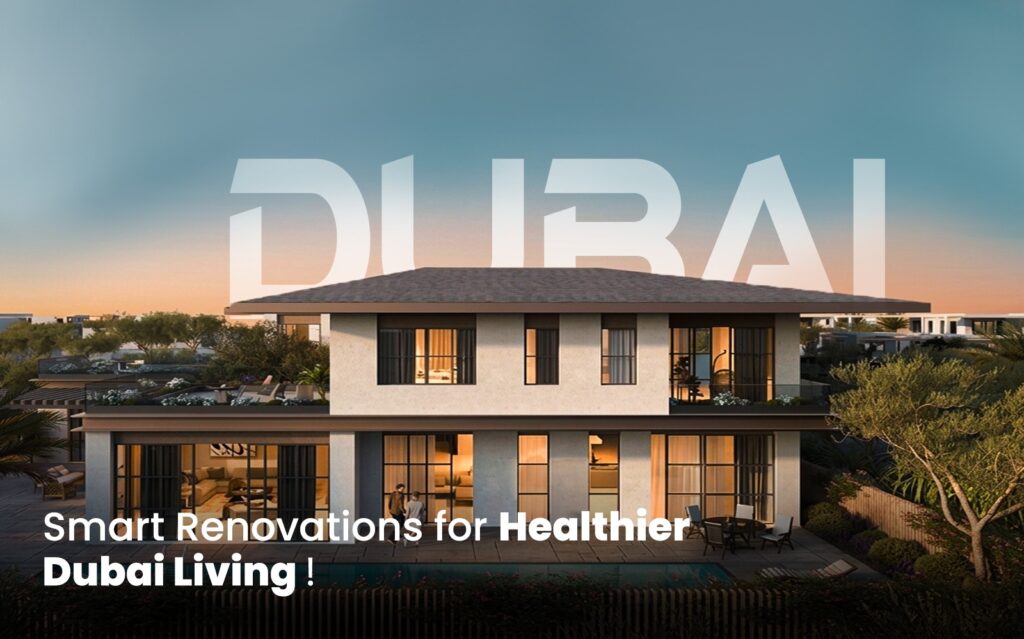
Something has shifted in Dubai’s luxury residential landscape. In communities from Al Barari to Jumeirah Bay Island, a quiet transformation is occurring behind villa walls. It’s not about square footage or imported fixtures—it’s about creating spaces that actively restore what living in a global business hub extracts from you.
The reality is straightforward: Dubai is extraordinary, but it’s also demanding. The heat, the pace, the relentless operational tempo—they accumulate. Increasingly, residents are asking: shouldn’t my home support recovery, not just provide shelter?
The answer requires understanding the intersection of human physiology, material science, and Dubai’s challenging climate. Installing a sauna is simple. Engineering an environment that won’t breed mold within months or compromise respiratory health through inadequate ventilation—that demands expertise.
The Economics of Wellness Infrastructure
The UAE’s wellness economy has reached $40.8 billion, expanding 22.8% between 2019 and 2024. But the significant metric isn’t market size—it’s what drives it.
Properties with integrated wellness facilities command measurable premiums: 37% for branded wellness residences, 20% higher occupancy for recovery amenities, 14% annual appreciation in holistic communities. These aren’t vanity purchases. Buyers recognize that peak performance requires effective recovery infrastructure.
When managing operations across time zones and maintaining high cognitive output, recovery becomes operational necessity rather than luxury. Communities like Dubai Hills Estate consistently outperform conventional properties because they address what traditional luxury overlooks: spaces designed to restore, not merely impress.
Design Based on Neurophysiology, Not Aesthetics
Effective wellness design follows actual nervous system function—neuroaesthetics, the study of how environments affect physiological states. Most installations fail because they ignore a fundamental principle: your nervous system requires progressive decompression. You cannot transition directly from high-stress executive function to deep recovery.
Spatial sequencing matters. Arrival spaces use warm lighting (2700-3000K) and restrained color palettes to signal cortisol reduction before conscious relaxation begins. Thermal zones leverage heat and cold to trigger specific biological responses—detoxification, cellular repair, cardiovascular training. Hydrotherapy areas employ contrast therapy: alternating sauna heat and cold plunge protocols that performance athletes have used for decades to accelerate recovery.
Recovery labs house infrared panels for cellular optimization, red-light therapy for inflammation reduction. Treatment rooms require acoustic isolation because parasympathetic nervous system activation cannot occur above certain ambient noise thresholds. Stillness zones recognize that mental recovery demands different environmental conditions than physical recovery—proper acoustic management, biophilic elements, sound diffusion preventing dead spots.
Each zone prepares your system for the next. Disrupting this progression means fighting your biology rather than working with it.
How long does it take to design and build a complete wellness suite?
A properly engineered wellness suite typically requires 3-4 months from initial consultation to completion. This includes comprehensive space assessment (2-3 weeks), detailed engineering and design (4-6 weeks), material procurement (3-4 weeks), and construction with integrated MEP systems (8-10 weeks). Rushed installations invariably compromise on critical elements like proper humidity control or acoustic isolation, leading to expensive repairs within the first year.
Thermal Technology for Dubai's Climate
Modern sauna technology has evolved significantly beyond timber cabins. Infrared systems have become standard in the UAE because they solve a specific problem: heating the body directly through light rather than creating oppressively humid environments. This provides equivalent detoxification and sleep quality benefits while remaining tolerable in a climate where residents already combat heat continuously.
Fire-and-ice protocols—alternating between thermal stress and cold immersion—train cardiovascular resilience while accelerating recovery. Himalayan salt wall integration releases negative ions and magnesium when heated, delivering documented respiratory benefits while providing ambient illumination.
Premium brands serve different requirements: KLAFS offers German engineering precision with integrated aromatherapy and chromotherapy. Harvia maintains Finnish authenticity with contemporary technology. TyloHelo provides minimalist aesthetics with rapid heat-up for time-constrained professionals. Almost Heaven delivers US craftsmanship in Western Red Cedar for outdoor installations.
Hammam revival honors Middle Eastern tradition while meeting modern performance standards. Authentic installations feature three-phase layouts: warm steam rooms, central marble for traditional scrubbing rituals, cooler massage areas. Iridescent mosaics, Omani marble, travertine—these materials create culturally resonant experiences exceeding what conventional spa design delivers.
Materials Engineered for Performance
Most wellness suite failures occur invisibly—mold establishing in drywall, wood warping from humidity, grout lines becoming bacterial colonies. Beautiful surfaces hiding structural problems.
Italian marble (Carrara, Calacatta) functions in Dubai spas because it maintains naturally cool temperatures, providing tactile relief while its light-reflective properties enhance spatial perception. Travertine retains less heat than synthetic alternatives, crucial for surfaces with frequent skin contact. Its subtle earth tones create visual warmth without thermal retention.
- Specialty woods serve specific functions: Hinoki’s natural aromatics and moisture resistance suit meditation spaces. Teak’s durability withstands humidity and salt air without degradation—essential for shower decks and sauna benches.
- Tadelakt—Moroccan lime plaster—eliminates grout lines where mold typically establishes. When treated with olive soap, chemical reactions produce hard, water-resistant, fungicidal surfaces outlasting tile by decades. Venetian plaster offers critical breathability through microscopic pores allowing water vapor movement, preventing the condensation buildup that destroys conventional finishes in air-conditioned UAE villas.
What's the biggest mistake people make when adding wellness features to their Dubai villa?
The most common and expensive mistake is treating wellness additions as isolated installations rather than integrated systems. Installing a sauna without properly engineering the dehumidification, ventilation, and waterproofing means you’re creating a future mold problem regardless of how beautiful the initial installation appears. In Dubai’s coastal humidity with internal moisture from thermal features, failure is the default outcome without comprehensive MEP integration from the beginning.
Engineering That Prevents Failure
In Dubai’s coastal humidity with internal moisture from saunas and steam rooms, sophisticated design means nothing if mechanical systems fail.
- Humidity control requires maintaining 40-60% relative humidity in spaces generating massive moisture. This demands ducted dehumidifiers integrated into HVAC systems—not standalone units. Hygroscopic buffering using natural clay or lime plasters absorbs humidity spikes. Vapor barriers ensure moisture doesn’t migrate behind walls near electrical systems.
Ventilation engineering requires Energy Recovery Ventilators recycling conditioned air while filtering PM2.5 particulates that Dubai’s outdoor air carries. Pressure balancing prevents negative pressure that would pull humid salt-laden air through building envelope gaps.
Mold prevention demands humidity-sensing exhaust fans running 15-20 minutes post-use, mandatory HVAC maintenance preventing water accumulation, hygrometer monitoring providing real-time alerts. These aren’t luxury features—they’re fundamental requirements preventing health hazards and structural damage.
- Acoustic isolation determines whether wellness spaces function as retreats or merely look attractive. Mass-Loaded Vinyl blocks mechanical noise. Decoupling systems prevent vibration transfer. Proper sealing around every penetration, interior acoustic treatment with fabric-wrapped panels and natural dampeners—all engineered to maintain reverberation below 0.5 seconds where human nervous systems register environments as calm.
How much should I budget for a high-performance wellness suite in Dubai?
Budget expectations vary significantly based on scope. A basic sauna installation with minimal MEP integration starts around AED 80,000-120,000. A comprehensive wellness suite with designer sauna, custom hammam, cold plunge, proper humidity control, acoustic isolation, and premium materials typically ranges AED 350,000-600,000. Full wellness floors with multiple thermal zones, hydrotherapy features, recovery labs, and complete MEP integration can exceed AED 800,000. The key consideration isn’t initial cost but lifecycle cost—properly engineered installations require minimal maintenance and avoid expensive mold remediation or system replacements that plague inadequate installations.
Our Approach
Since 2006, Wahat Babil approached wellness suites as engineering challenges requiring integrated solutions. Beautiful installations that fail within months serve no one.
- Our process begins with understanding how you live—not how wellness spaces photograph, but how you move through your day, what depletes you, what you require for recovery. We map specific recovery patterns before specifying materials.
- We coordinate everything as one system. When we install KLAFS, Harvia, or TyloHelo saunas, our thermal installation team coordinates directly with our dehumidification engineers. When we specify Italian marble or travertine, our installers work with our waterproofing specialists. When we build custom hammams, we’re simultaneously engineering vapor barriers and humidity controls ensuring decades of function.
- Our MEP integration is foundational, not supplementary. We size dehumidification for actual moisture loads. We calculate ventilation accounting for Dubai’s particulate levels. We install hygrometer monitoring integrated with smart home systems providing alerts before problems emerge. We engineer pressure balancing preventing humid air infiltration.
- We specify materials for five-year performance, not completion photography. When we recommend Tadelakt or Venetian plaster, it’s because we’ve documented what happens to conventional finishes in Dubai’s climate. When we install Hinoki or teak, we’re selecting for durability against humidity and salt air. When we source specialty woods or onyx, we’re considering long-term performance.
- Our acoustic engineering creates functional isolation. We install Mass-Loaded Vinyl understanding exactly how it blocks mechanical noise. We design decoupling preventing vibration transfer. We seal every penetration because sound isolation isn’t about heavy doors—it’s about eliminating hundreds of tiny gaps conventional construction ignores.
- What differentiates our work is integrated accountability. Our sauna specialist coordinates with dehumidification engineers ensuring mechanical systems handle thermal loads. Our marble installers work with waterproofing teams ensuring beautiful surfaces aren’t concealing future problems. Our acoustic engineers design isolation knowing specific noise sources in your villa layout.
Everything functions together because we engineered it together from inception—not assembled from disconnected subcontractors making independent assumptions.
Over 18 years and 75+ villa transformations, we’ve learned: the most expensive mistake isn’t over-engineering—it’s building something beautiful that doesn’t work.
If your home should restore you rather than simply house you, contact us for a consultation about wellness spaces engineered for how you actually live.