


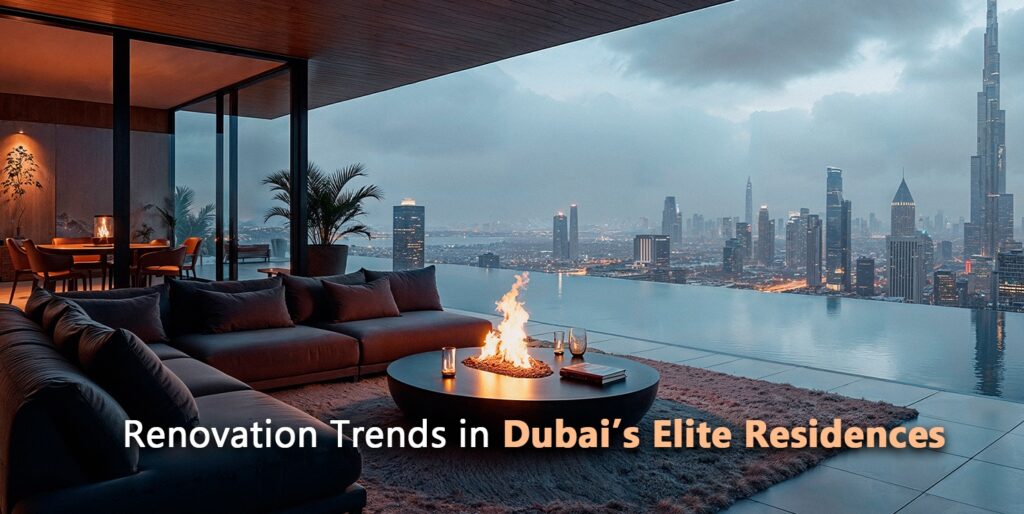
Dubai’s residential landscape is undergoing a quietly radical evolution. Homeowners across the city’s most coveted addresses are no longer simply renovating they are rethinking what a home is fundamentally designed to do. The shift is visible across design studios, contractor briefings, and real estate valuations alike. A new philosophy has taken hold: one that places human biology, environmental responsibility, and cultural identity at the very centre of how living spaces are conceived and built.
This evolution has a name. Designers, architects, and renovation specialists increasingly refer to it as the “Centric” philosophy, a disciplined framework for creating homes oriented around the actual needs of the people who inhabit them, rather than around the display of wealth for its own sake. The implications for homeowners, investors, and renovation professionals are significant and lasting.
What Is Driving This Transformation?
Dubai’s urban ambitions are reshaping private residential standards as much as public spaces. The city’s long-term development vision emphasises liveability, green integration, and sustainable infrastructure. These macro-level priorities are filtering directly into the renovation decisions being made at the villa and apartment level.
Homeowners are asking more sophisticated questions than before. Not “how large can this space be?” but rather “how well does this space serve us?” This represents a meaningful cultural shift particularly among long-term residents, expatriate professionals, and families who have made Dubai their permanent home.
Several interconnected forces are converging:
- A post-pandemic reassessment of home functionality, where the residence is simultaneously a sanctuary, workspace, and wellness environment
- Rising awareness of Dubai’s climatic realities, pushing homeowners to invest in thermal performance, air quality, and energy resilience
- A maturing appetite for regional identity in design, moving beyond imported European aesthetics toward a synthesis of Islamic heritage and contemporary luxury
Long-term property strategy, where renovation is understood as a tool for capital preservation and rental yield enhancement
The Five Pillars of Centric Renovation
1. Wellness-Centric Bio-Optimisation
What does it mean for a home to support physical recovery? In Dubai’s current renovation cycle, it means the integration of contrast therapy, advanced air purification, and sensory design within domestic spaces.
- Infrared saunas and cold plunge installations are transitioning from hospitality amenities to residential expectations
- Whole-home HEPA filtration addresses the specific air quality challenges of a desert climate, filtering fine particulate matter and chemical compounds
- Multi-stage water purification systems ensure drinking and bathing water meets standards appropriate for long-term health
The underlying principle is that a home should actively contribute to the biological wellbeing of its occupants not simply provide shelter. Sensory design elements, including tactile materials such as lime plaster, clay surfaces, and unpolished stone, reinforce this by reducing cognitive load and creating environments that feel genuinely restorative.
What rooms are most transformed by wellness-centric upgrades? Master suites, dedicated recovery zones, and service bathrooms see the highest concentration of bio-optimisation investment, though whole-home air and water systems are integrated at the infrastructure level from the outset.
2. Human-Centric Intelligence
Technology in the elite Dubai home is no longer meant to be visible. The defining characteristic of intelligent home systems in the current cycle is invisibility systems that anticipate, adapt, and serve without demanding attention.
- Circadian lighting systems mirror the sun’s natural spectrum, shifting from cool high-kelvin tones during daylight hours to warm amber tones in the evening, which research suggests may improve sleep quality over time
- Predictive AI platforms learn household rhythms and adjust climate, lighting, and audio without manual instruction
- Audio-visual installations disappear behind architectural surfaces, activating only on demand
How does intelligent technology affect property appeal? Homes with fully integrated, single-ecosystem smart systems are increasingly associated with stronger buyer demand and faster leasing cycles. Buyers and tenants are treating this level of integration as a baseline expectation rather than a premium feature, which can improve resale appeal in a competitive market.
3. Nature-Centric Biophilic Design
- Hydroponic herb walls serve as both air purifiers and functional kitchen features
- Retractable glass facades dissolve the boundary between living areas and landscaped exteriors
- Indoor water features create acoustic landscapes that reduce environmental stress
- Climate-controlled conservatories allow garden immersion even during peak summer months
Studies suggest that consistent exposure to natural materials, living greenery, and natural soundscapes is associated with lower stress responses and improved occupant mood and productivity. In Dubai’s urban context, where outdoor access is seasonally limited by heat, bringing nature indoors carries both psychological and practical value that many homeowners and tenants increasingly seek out when evaluating a property.
4. Efficiency-Centric Infrastructure
The home’s mechanical and envelope systems are being fundamentally upgraded to meet both performance expectations and emerging regulatory standards.
- Radiant cooling systems circulate chilled water through embedded pipe networks, providing silent, draft-free climate control with meaningful reductions in energy consumption
- Thermal break joinery in aluminium window frames dramatically reduces heat conduction into the home
- Solar photovoltaic integration, paired with residential battery storage, enables meaningful energy autonomy and reduces long-term operational costs
What is the financial case for efficiency upgrades? The combination of reduced utility expenditure, alignment with green building standards, and future-proofing against potential regulatory shifts makes efficiency infrastructure an increasingly well-regarded area of renovation investment one that industry observers commonly cite as offering tangible long-term returns relative to its upfront cost.
5. Culture-Centric Aesthetic
- Mashrabiya-inspired laser-cut metal partitions translate Islamic lattice traditions into contemporary architectural elements
- Modern Earth Luxe palettes, sand, terracotta, muted berry , anchor interiors in the regional landscape
- Bespoke, handcrafted furniture replaces mass-produced pieces, with an emphasis on narrative, materiality, and scale appropriate to Dubai’s generous villa proportions
- Coffered ceilings and patterned floor rugs define zones within open-plan layouts, adding spatial richness without structural change
Renovation as Strategic Investment
Each of these five pillars contributes not only to liveability but to property performance over time. Homes that thoughtfully integrate wellness infrastructure, intelligent systems, biophilic environments, energy-efficient envelopes, and culturally coherent aesthetics can improve resale appeal and are increasingly associated with stronger interest from both buyers and premium tenants compared to properties that have not been similarly upgraded.
Building the Future of Dubai Living
Executing a renovation strategy at this level of complexity requires a partner with both technical capability and design fluency. Wahat Babil brings exactly this combination to homeowners across Dubai. Specialising in villa and residential renovation, Wahat Babil works with clients to translate the principles of Centric design into spaces that are precisely calibrated to their lives — functional, beautiful, and built to endure. For homeowners ready to align their property with the standards defining Dubai’s most valuable residences, Wahat Babil offers the expertise, craftsmanship, and strategic insight to make that vision a reality. Contact Wahat Babil to begin the conversation.