


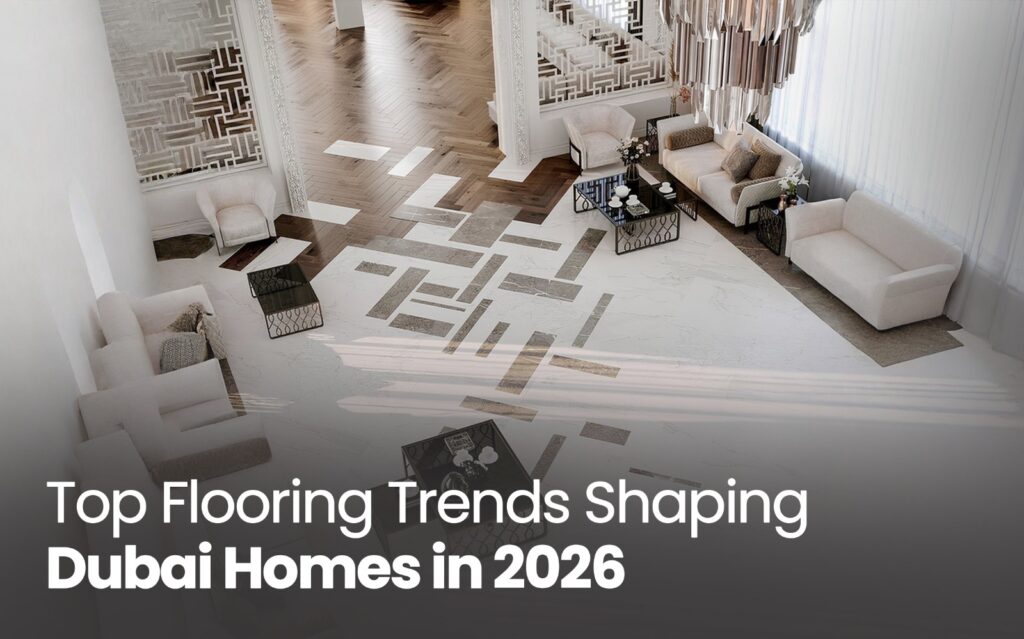
Dubai’s flooring landscape is experiencing a dramatic transformation in 2026, driven by evolving lifestyle demands, climate-conscious choices, and luxury expectations that continue to rise. The convergence of sustainability, advanced materials technology, and biophilic design principles is reshaping how homeowners approach floor selection for villas and apartments across the emirate.
This shift reflects broader changes in Dubai’s interior design philosophy—moving beyond purely aesthetic considerations toward functional excellence that addresses the city’s unique environmental challenges. From scorching summers exceeding 50°C to humid coastal conditions and pervasive sand infiltration, 2026’s trending floor designs combine visual appeal with proven performance in the UAE’s demanding climate.
Trend 1: Smart Material Choices for Dubai's Extreme Climate
SPC Flooring: The Climate Champion
Stone Plastic Composite flooring dominates 2026 Dubai installations for compelling reasons. This 100% waterproof material features a rigid limestone-infused core that remains dimensionally stable despite humidity swings and temperature extremes. Unlike traditional materials that warp or gap, SPC maintains perfect flatness whether exposed to air conditioning’s drying effects or Dubai’s coastal moisture.
The material’s scratch and dent resistance makes it ideal for high-traffic areas, active families with children and pets, and rental properties requiring durable, low-maintenance solutions. With realistic wood and stone textures achieved through advanced printing technology, SPC delivers luxury aesthetics without natural material vulnerabilities.
Porcelain and Ceramic Tiles: Timeless Performance
Large-format porcelain slabs continue their reign in 2026, offering seamless luxury with minimal grout lines that simplify cleaning in sandy environments. These non-porous tiles handle extreme surface temperatures without warping or fading, making them perfect for sun-exposed areas and outdoor extensions.
Wood-look porcelain represents a growing segment, providing timber aesthetics without moisture sensitivity. Marble-effect tiles deliver Italian luxury at fraction of natural stone costs, while terrazzo-inspired patterns bring modernist sophistication to contemporary Dubai interiors.
Luxury Vinyl Tiles: Soft Luxury
LVT gains market share in 2026 through softer underfoot feel and acoustic benefits critical in Dubai’s apartment buildings. Water-resistant formulations suit kitchens and bathrooms, while realistic textures mimic premium materials at accessible price points. The quieter performance compared to hard tiles addresses noise concerns in multi-story residences.
Engineered Wood: Warmth with Stability
While solid hardwood struggles in Dubai’s climate, engineered wood’s layered construction provides dimensional stability against humidity-driven expansion. The 2026 trend favors wide planks in rich chocolate browns and deep walnut tones, delivering warmth and sophistication in well-controlled living spaces.
Critical caveat: Engineered wood remains unsuitable for bathrooms, balconies, or poorly air-conditioned spaces—reserve it for dry, climate-controlled areas where its aesthetic impact justifies the investment.
Natural Stone and Marble: Ultimate Luxury
Despite practical alternatives, natural marble and granite maintain prestigious positions in 2026 Dubai villas. Bookmatched slabs create dramatic feature floors in grand entrances, while inlaid borders frame living rooms with custom luxury. The materials’ natural cooling effect provides comfort advantages in hot climates, though installation and maintenance costs remain premium.
Trend 2: Patterns That Create Visual Impact
Large-Format Minimalism
The 2026 movement toward larger tile formats continues accelerating, with slabs reaching 120x240cm creating nearly seamless expanses. Minimal grout lines deliver hotel-like elegance while simplifying maintenance—a practical luxury in Dubai’s dusty environment. These formats work particularly well in open-plan layouts, visually expanding spaces without interruption.
Herringbone and Chevron Revival
Classic patterns return with contemporary materials. Herringbone and chevron layouts in SPC, engineered wood, and wood-look porcelain add movement and sophistication to living areas. These patterns create perceived length in corridors and visual interest in larger rooms without overwhelming smaller Dubai apartments.
Geometric Boldness
Hexagonal tiles, Moroccan-inspired patterns, and bold geometric layouts bring personality to powder rooms, kitchens, and feature walls. The 2026 approach favors subtle color palettes—grays, beiges, and muted earth tones—letting pattern create impact without visual chaos.
Material Zoning
Open-plan Dubai apartments increasingly use flooring transitions to define functional zones. Porcelain in cooking areas transitions to warmer SPC or engineered wood in living spaces, creating distinct zones while maintaining visual flow. This practical approach addresses different performance requirements while adding design sophistication.
Trend 3: Warm, Nature-Inspired Color Palettes
The Shift from Cool to Warm
2026 marks a decisive departure from gray-dominated interiors toward warmer, more inviting palettes. Rich chocolate browns, deep walnuts, terracotta accents, and amber-toned oaks replace the cool grays and whites that dominated previous years.
This warming trend reflects broader biophilic design principles—creating interiors that psychologically connect with nature despite Dubai’s urban density and harsh outdoor conditions.
Earth Tones for Every Space
Sand beiges, clay tones, sage greens, and stone grays dominate 2026 color stories. These nature-inspired palettes work particularly well in Dubai’s bright, sun-filled interiors, creating calming foundations for furniture and artwork.
For smaller apartments, light sand and beige tones in SPC or porcelain visually expand spaces while maintaining warmth—a sophisticated alternative to stark white tiles.
High-Contrast Drama
Statement rooms increasingly feature dramatic contrast: dark chocolate floors against bright white walls, or light marble against deep-painted surfaces. This bold approach works best in spaces with strong natural light—Dubai’s sunshine enables contrast levels that would overwhelm darker climates.
Trend 4: Texture, Finish, and Comfort Considerations
Matte Finishes Dominate
High-gloss tiles fade from favor in 2026, replaced by matte and satin finishes that hide dust, scratches, and footprints—critical in Dubai’s sandy environment. These practical surfaces maintain luxury appearance while reducing daily maintenance burden.
Realistic Textures
Advanced manufacturing delivers increasingly convincing surface textures. Hand-scraped wood effects, wire-brushed grains, and stone surface variations bring tactile realism to synthetic materials. High-texture SPC and embossed porcelain fool the eye and hand, delivering premium appearance at mid-market pricing.
Anti-Slip Safety
Bathrooms, kitchens, and outdoor transitions require textured surfaces preventing slips. The 2026 approach integrates subtle surface texture maintaining aesthetics while meeting safety requirements—particularly important in homes with elderly residents or young children.
Acoustic Comfort
Apartment dwellers increasingly prioritize acoustic performance. Quality underlays beneath SPC and engineered wood reduce sound transmission between floors, while LVT’s inherent cushioning provides quieter performance than hard tiles—a consideration in Dubai’s high-density residential towers.
Trend 5: Sustainability Meets Performance
Eco-Conscious Material Choices
Sustainability enters mainstream consciousness in 2026 Dubai renovations. Engineered wood with certified sustainable sources, bamboo alternatives, and tiles incorporating recycled content appeal to environmentally conscious homeowners while meeting LEED and Estidama certification requirements.
Marmoleum—made from linseed oil, wood flour, and limestone—offers bio-based flooring with low VOC emissions suitable for health-focused families.
Long-Term Value Thinking
The 2026 sustainability conversation extends beyond eco-credentials to lifecycle thinking. Durable materials lasting 20-30 years with minimal maintenance represent true sustainability—reducing replacement frequency and associated waste. This perspective favors quality porcelain, properly installed SPC, and premium engineered wood over cheaper alternatives requiring frequent replacement.
Biophilic Design Integration
Floors increasingly participate in broader biophilic design strategies. Natural wood tones, stone effects, and earth-inspired colors create psychological connections to nature even in high-rise apartments. This approach recognizes floors as foundational elements in wellness-focused interior design.
How to Choose the Right Floor for Your Dubai Home
Decision Framework
Step 1 – Climate Assessment: Identify moisture exposure, temperature extremes, and sun exposure in each space.
Step 2 – Lifestyle Evaluation: Consider children, pets, rental vs. ownership, and maintenance tolerance.
Step 3 – Budget Reality: Balance upfront costs against long-term performance and replacement frequency.
Step 4 – Aesthetic Vision: Select materials and patterns aligning with overall design direction.
Step 5 – Professional Installation: Ensure proper subfloor preparation, climate acclimation, and expert installation.
Room-Specific Recommendations
Living Areas: SPC, engineered wood, or large-format porcelain in warm tones
Kitchens: Waterproof SPC or porcelain with matte finish
Bathrooms: Porcelain with anti-slip texture or waterproof LVT
Bedrooms: Engineered wood or premium SPC for comfort
Balconies: Weather-resistant porcelain or composite decking
Why Choose Wahat Babil for Your 2026 Home Transformation?
At Wahat Babil, we believe that exceptional floor design is only one layer of a masterpiece. As a premier Interior Designing Company in Dubai, we operate at the intersection where art meets precision engineering. We don’t just follow trends; we define them by integrating the 2026 flooring shifts into a holistic vision for your home.
As a leading Home & Villa Renovation Company in Dubai, we specialize in transforming the emirate’s finest properties into bespoke sanctuaries of elegance. Our expertise extends far beyond the surface:
- Expert Tiling & Flooring: As a premier Tiling Company in Dubai, we are dedicated to the art and science of precision installation, ensuring your large-format porcelain or SPC floors are laid with microscopic accuracy.
- Specialized Renovation: From being a top-tier Bathroom Renovation Company to an authority in high-end Kitchen Renovation in Dubai, we deliver precision-engineered solutions that turn functional spaces into stunning, high-performance sanctuaries.
- Structural Excellence: If your 2026 vision requires more space, our team handles Structural Villa Extensions in Dubai, expanding your lifestyle with seamless architectural integration.
- The Finishing Touches: We redefine interiors with masterfully crafted Ceiling Work—the crowning feature of any room—and professional Painting Work that turns your walls into a personal gallery of style.
Technical Rigor and Comprehensive Care
Wahat Babil understands that a beautiful home must also be a functional one. Our integrated MEP Services (Mechanical, Electrical, and Plumbing) ensure that the “bones” of your luxury property are as sophisticated as the aesthetics. Furthermore, because we understand the UAE climate, our AC Service in Dubai provides the expert maintenance and installation required to protect your new flooring and interior investments from heat and humidity.
Looking for a construction partner that is fully updated and at par with 2026’s most sophisticated trends? Wahat Babil is the most trusted name for discerning homeowners. Whether you are planning a minor update or a total structural overhaul, we bring technical excellence to every square meter.
Contact us today to discuss how we can bring 2026’s most compelling design trends to your Dubai home with the uncompromising quality your investment deserves.