


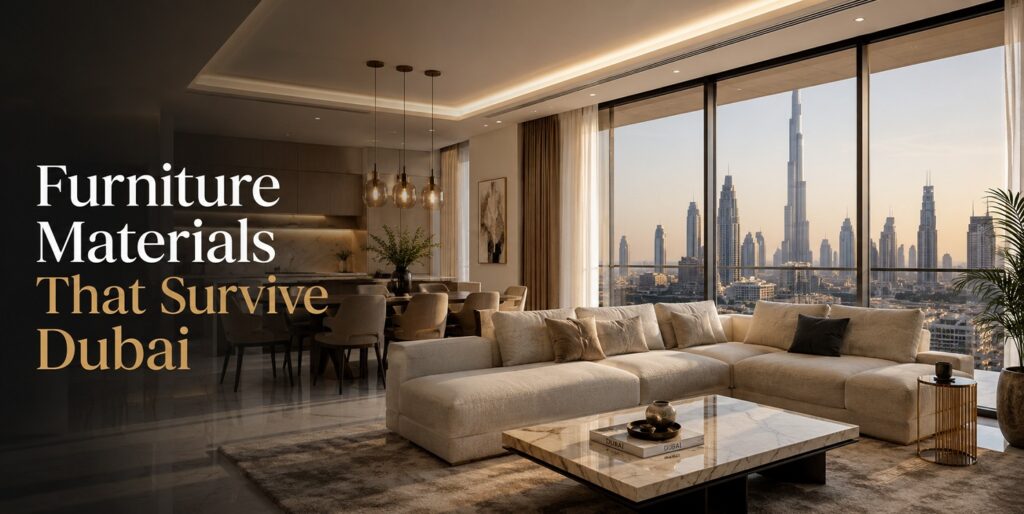
Many Dubai homeowners invest heavily in furniture during a renovation only to notice cracks, fading or peeling finishes a few years later. In most cases, the problem is not poor design alone. It is the indoor environment created by constant air conditioning, strong sunlight and shifting humidity levels between indoor and outdoor spaces.
In villas across Dubai, furniture materials face a unique combination of dry cooled air indoors and humid heat outdoors. Wood can shrink, leather can dry out and low-quality metal coatings can lose their finish faster than expected. Choosing the right materials early during a renovation helps you avoid unnecessary replacements and maintenance costs later.
The Hidden Problem: Your AC Is Drying Out Your Furniture
Air conditioning is essential in Dubai, but it also changes how indoor materials behave over time. Constant cooling removes moisture from indoor air. When furniture repeatedly moves between dry indoor conditions and warmer humid conditions near windows, balconies or entrances, materials expand and contract.
This is one reason why many homeowners searching for the best furniture materials Dubai suppliers recommend are surprised when natural materials begin ageing prematurely.
Here is what commonly happens inside air-conditioned homes:
Wood Shrinkage And Cracking:
Natural timber loses moisture in dry indoor air. Over time, this may lead to visible cracks, joint separation or warped cabinet doors.
Fabric Fading Near Windows:
UV exposure through large villa windows causes some fabrics to lose colour quickly, especially lighter natural fibres.
Metal Finish Damage:
Lower-quality coated metals may oxidise or develop dull white marks due to humidity fluctuations.
Leather Drying Out:
Leather exposed to constant AC airflow often becomes stiff or starts peeling if not properly treated.
Best Wood Types For Dubai Homes
When choosing timber for furniture, cabinetry or shelving, durability matters more than appearance alone. Some wood products cope with Dubai’s indoor climate far better than others.
Teak Remains One Of The Most Stable Options
Teak performs well because it naturally contains oils that resist moisture changes. It is less likely to crack compared to softer woods.
Teak works especially well for:
- Dining tables
- Bed frames
- Built-in shelving
- Accent furniture near windows
Although teak costs more upfront, it usually requires less repair work over time.
Marine-Grade Plywood Performs Better Than Standard Plywood
Marine-grade plywood is designed to resist moisture movement and internal delamination. In Dubai villas, this makes it useful for kitchens, wardrobes and TV units where temperature shifts happen regularly.
Compared to cheaper particle boards, marine-grade plywood offers:
- Better structural stability
- Reduced swelling risk
- Longer lifespan in humid conditions
This material is often recommended during villa fit-outs because it balances durability with flexibility in design.
Sealed MDF Works Well For Painted Cabinetry
MDF is commonly used for modern interiors because it creates smooth painted finishes. However, untreated MDF absorbs moisture quickly.
Proper sealing is essential. High-quality sealed MDF performs well for:
- Wall panelling
- Painted wardrobes
- Decorative shelving
- Media units
This is particularly relevant when discussing wood furniture humidity Dubai challenges during renovations. Poor sealing usually causes edges to swell or finishes to peel much earlier.
Fabrics That Last Longer In Sunny Rooms
Furniture fabrics in Dubai homes deal with two major issues: UV exposure and dry cooled air. Choosing durable upholstery becomes especially important in living rooms with large windows.
Performance Fabrics Offer Better Long-Term Value
Performance fabrics are engineered to resist fading, stains and wear. Many newer options also feel softer and more natural compared to older synthetic materials.
They are ideal for:
- Family sofas
- Sectional seating
- Dining chairs
- Lounge furniture
Performance weaves maintain colour better in bright rooms and generally require less maintenance.
Linen Looks Beautiful But Needs Careful Placement
Natural linen suits many contemporary villa interiors, but it reacts more strongly to sunlight and dry air.
If you use linen:
- Avoid placing it directly beside full-height windows
- Use curtains or UV-filtering blinds
- Choose blended fabrics instead of pure linen where possible
Linen can still work well in formal rooms with controlled sunlight exposure.
Bouclé And Textured Weaves Are More Practical Than You Might Expect
Many textured fabrics hide dust and minor wear more effectively than flat weaves. This is useful in Dubai where fine dust enters homes even with sealed windows.
For high-use family areas, textured upholstery often ages more evenly over time.
Metal Finishes That Do Not Deteriorate Quickly
Metal furniture frames, handles and decorative trims are increasingly common in modern Dubai interiors. However, not all finishes tolerate humidity fluctuations well.
Brushed Stainless Steel Stays Stable Longer
Brushed stainless steel is one of the safer long-term options for indoor applications.
It works well for:
- Kitchen hardware
- Stair details
- Furniture legs
- Decorative shelving frames
Unlike cheaper plated metals, stainless steel resists corrosion and surface discolouration more effectively.
PVD Brass Finishes Are More Durable Than Traditional Coatings
PVD coating creates a tougher protective layer compared to standard electroplated finishes.
This helps prevent:
- Peeling
- Tarnishing
- Uneven fading
- White oxidation marks
PVD brass is increasingly used in luxury villa renovations because it maintains its appearance longer in air-conditioned interiors.
Leather In Dubai: What Goes Wrong And How To Prevent It
Leather furniture often struggles in homes where AC runs continuously throughout the year. Dry indoor air removes natural oils from the material, causing stiffness and cracking.
Common issues include:
- Surface peeling
- Colour fading
- Hardening around cushions
- Cracks along seams
To reduce damage:
- Keep leather away from direct AC vents
- Use leather conditioners regularly
- Avoid placing leather beside large sunny windows
- Choose treated or semi-aniline leather instead of delicate untreated finishes
If you prefer low-maintenance seating, performance fabric upholstery is usually easier to manage long term.
Room-By-Room Material Guide For Dubai Villas
Different rooms experience different levels of sunlight, usage and temperature changes. Material selection should reflect how each space functions daily.
Living Room
Living rooms often receive the most sunlight and heavy daily use.
Recommended materials include:
- Teak or engineered wood tables
- Performance fabric sofas
- PVD-coated metal accents
- UV-resistant curtains and upholstery
Avoid delicate untreated woods beside floor-to-ceiling glazing.
Bedroom
Bedrooms usually experience more stable conditions, allowing slightly softer materials.
Good options include:
- Upholstered fabric headboards
- Sealed MDF wardrobes
- Oak veneers with protective finishes
- Brushed metal lighting fixtures
Soft natural fabrics can work here because sunlight exposure is usually lower.
Dining Room
Dining areas experience regular cleaning, food spills and shifting temperatures from nearby kitchens.
Choose:
- Scratch-resistant timber finishes
- Easy-clean woven fabrics
- Stainless steel hardware
- Durable sealed stone or timber tops
This is where an indoor material guide UAE villa owners can rely on becomes especially valuable during renovation planning.
Why Material Choices Matter During Renovation
Furniture durability is not only about standalone pieces. During villa renovations, many material decisions happen early through built-in joinery, shelving and cabinetry specifications.
Cabinet interiors, wall cladding, shelving systems and kitchen finishes all need to handle Dubai’s indoor climate properly. Choosing the wrong substrate or finish may lead to swelling, cracking or visible ageing within a few years.
Conclusion
Furniture materials behave differently in Dubai than they do in milder climates. Constant air conditioning, strong sunlight and humidity shifts place continuous stress on wood, fabric, leather and metal finishes. Choosing stable materials from the beginning helps reduce maintenance issues and extends the lifespan of your interiors.
For homeowners planning a renovation, these decisions become even more important during joinery and fit-out stages. Wahat Babil works closely with clients during villa and home renovations to help select materials suited to Dubai’s indoor conditions, ensuring built-in furniture and interior finishes remain practical as well as visually consistent over time.