


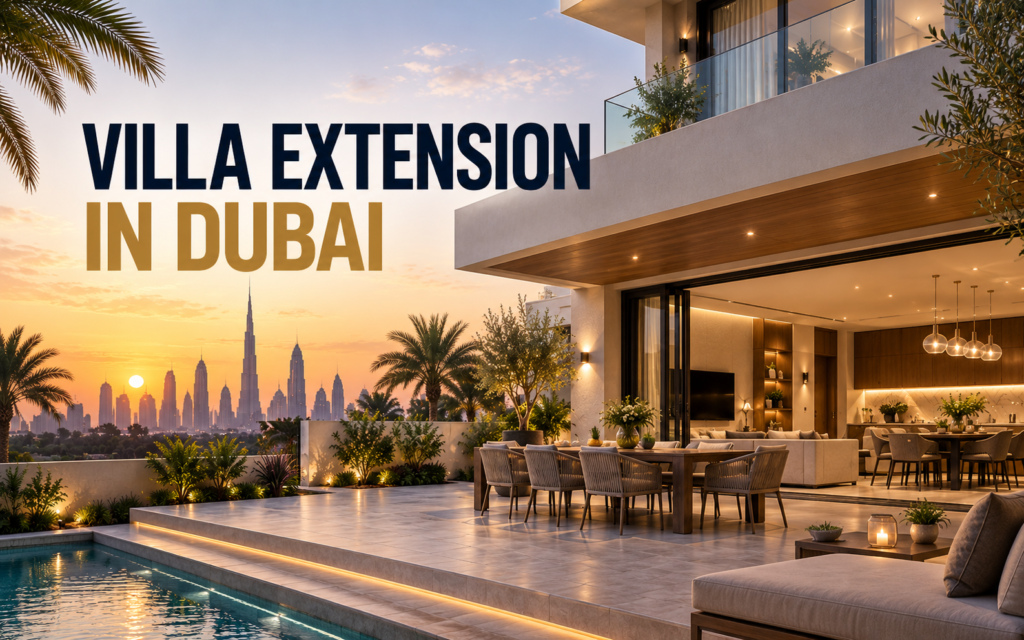
Adding a room, a second floor, or extra living space to a Dubai villa is not just a construction job. It is a regulatory one, and it involves more approving bodies than almost any other type of renovation. Where a kitchen refresh might need nothing more than a community notification, a structural extension typically needs sign off from your community developer, Dubai Municipality, DEWA, and sometimes Civil Defence, in a specific order. Get that order wrong and the delay costs more time than the construction itself.
This guide lays out what is actually confirmed about that process, using Dubai’s own construction law and DEWA’s published timelines, alongside what a real Wahat Babil extension project looked like on the ground.
The Law Behind Every Extension Approval
The starting point is Local Order No. 3 of 1999 Regulating Construction Works, still the operative law in Dubai. Article 4 requires a permit from the Competent Department before any work that changes the features of a property, in whole or in part. Article 3 defines work carried out without that permit as Illegal Construction Works. A villa extension, by definition, changes the built footprint of the property, so it sits squarely inside this requirement. There is no cosmetic exemption for adding square footage.
Skipping this step carries real consequences under Article 28: fines of up to AED 50,000, doubled for repeat violations, utility disconnection, and a block on future permit issuance. Article 26 goes further for the physical work itself, allowing authorities to order demolition of unpermitted structures and recover the cost from the owner, plus a 20 percent administrative fee. We covered this in full in our guide to villa renovation permits in Dubai, and every extension project starts from that same legal foundation.
Developer NOC First, Then Dubai Municipality
Most freehold villa communities in Dubai sit under Dubai Municipality for building permits. A smaller set, including Palm Jumeirah and other Nakheel or PCFC-adjacent communities, fall under Trakhees instead. We broke down exactly which authority applies to which community type in Trakhees vs. Dubai Municipality, and that distinction matters more for an extension than for almost any other renovation type, because the submission sequence differs between the two systems.
Where a master developer manages your community, such as Emaar or Nakheel, their no objection certificate is typically required before Dubai Municipality will accept a building permit application at all. In practice this means the developer NOC is not a parallel step, it is the first one. Submitting to Dubai Municipality before securing it is one of the most common causes of rejected applications among contractors working across multiple communities.
One point we want to be precise about: we did not find a Dubai Municipality published fee schedule or calendar day timeline for the building permit stage specifically, and we are not going to repeat the specific AED figures and week counts that circulate on other renovation companies’ websites, because none of them cite an official source for those numbers. If your extension involves structural change, ask your contractor or Dubai Municipality directly for a timeline based on your specific submission, not a generic industry figure.
DEWA and Civil Defence: Approvals an Extension Triggers That Cosmetic Work Doesn't
An extension almost always touches electrical and plumbing infrastructure, since new rooms need new circuits and, often, new water points. DEWA’s own published process, announced in May 2025, gives real, sourced timelines here: electrical NOCs process within two working days, water NOCs within three working days, when applied for directly. Where the NOC is tied to a Dubai Municipality building permit through the integrated Dubai Building Permit System, DEWA states a three working day turnaround. These are DEWA’s own figures, which is why we can state them with confidence, unlike most numbers attached to this topic online.
If your extension adds a second floor, changes fire escape routes, or creates new enclosed spaces, Civil Defence approval for fire and life safety compliance typically applies as well. We did not find a published Civil Defence fee or processing time from an official source, so we are flagging that gap rather than guessing at a figure.
One more layer worth checking before you finalize scope: if your villa was built or last permitted before Dubai’s current unified Building Code took effect in December 2021, the code’s applicability to your specific renovation is not automatic or fully spelled out. We covered exactly what that decree does and does not resolve in our guide to the Dubai Building Code and older villas.
What a Real Extension Looked Like: Deema Villa 89
Regulatory theory is one thing. What actually happens on site is another. Our Deema Villa 89 project was a full renovation combined with a structural extension in the Deema community, one of the regulated developments where operational rules such as noise curfews, delivery windows, and waste removal schedules are strictly enforced alongside the formal NOC and permit process.
During the project, the actual structural positions and service routes on site diverged from the original drawings, which happens in a meaningful share of older villas once walls come down and services are exposed. Rather than pausing for a formal revision cycle, our engineers and site managers produced revised drawings and worked through the trade offs directly with the client, keeping the regulatory submission aligned with what was actually being built rather than what the original drawings assumed. That distinction, between paperwork that matches the design intent and paperwork that matches the physical structure, is often where extension approvals stall on other projects.
How Wahat Babil Handles Extension Approvals
Our Structural Villa Extension service manages the full approval sequence in house: structural analysis for load bearing capacity, MEP system audits, and submission of the required applications to Dubai Municipality and your community’s management, before construction begins rather than alongside it. We have worked within regulated communities including The Springs, The Meadows, and Deema, where developer NOC requirements and community operational rules both apply.
We are not going to attach a single AED figure or a fixed week count to this article, for the same reason we did not attach one to our permit guide: no official source publishes one, and every extension differs by community, scope, and what a structural survey actually finds once work starts.
The Honest Summary
An extension needs, in sequence: your developer’s NOC where one applies, a Dubai Municipality (or Trakhees) building permit, DEWA sign off on electrical and water, and Civil Defence review where the scope requires it. The two timelines we can confirm, DEWA’s two to three working day NOC turnaround, are genuinely sourced. Everything else depends on your specific villa, community, and design, which is exactly why a proper structural survey and a contractor who manages the sequence in house matters more than a number on a website. If you are planning a villa extension, talk to Wahat Babil about scoping the approvals alongside the design, not after it.