


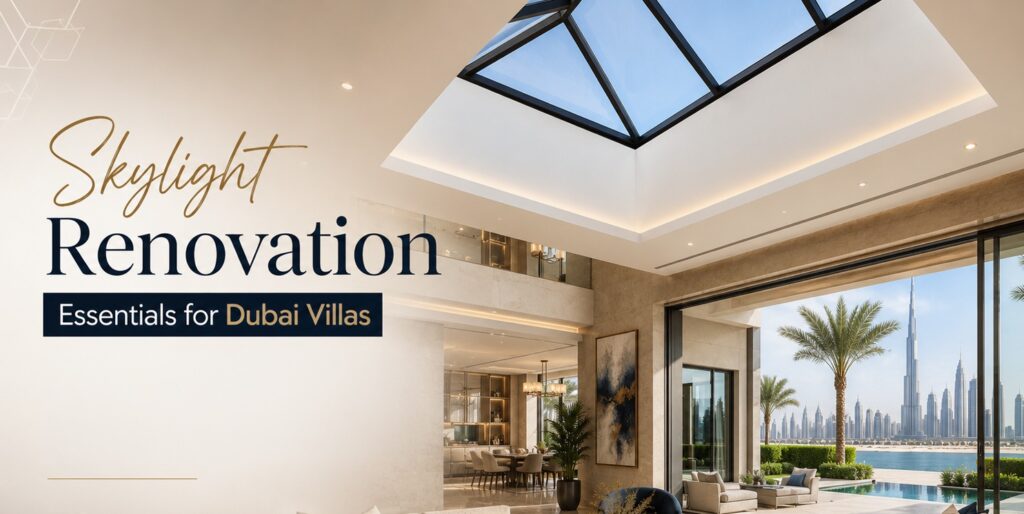
Dubai villas receive abundant sunlight throughout the year, yet many interiors still feel dim during the day. Heavy curtains, tinted windows and enclosed layouts are common because homeowners are trying to keep indoor temperatures under control. The result is a villa that depends heavily on artificial lighting even in the middle of the afternoon.
This is where skylights Dubai villas projects are becoming more relevant. A properly designed skylight can brighten dark corridors, staircases and double-height entrances without creating excessive heat gain. However, skylights are not simply glass openings in the roof. In Dubai’s climate, the wrong specification can increase cooling costs, create glare and even lead to leaks during seasonal rain.
If you are planning a villa renovation, it is important to understand which skylight systems work in the UAE climate, what technical specifications matter and how installation should be handled during renovation works.
Why Dubai Homes Are Darker Than They Should Be
Although Dubai has strong natural sunlight, many villas are designed to reduce direct heat exposure rather than maximise daylight. Older villas in areas such as Jumeirah, Al Barsha and Mirdif often have deep floor plans with limited light reaching the centre of the property.
This creates common problems such as:
- Dark stairwells: These areas usually have no direct external windows, making them dependent on artificial lighting throughout the day.
- Poorly lit corridors: Long internal hallways often feel enclosed because sunlight cannot travel far into the villa.
- Closed living spaces: Many homeowners keep blinds or curtains shut during summer months to control indoor temperatures.
A skylight solves a different problem compared to a wall window. Instead of bringing in side light, it introduces daylight from above, which spreads more evenly across the room.
For homeowners considering a daylighting renovation Dubai project, skylights are often most effective in areas where traditional windows are not practical.
Three Types Of Skylights And When To Use Them
Not every skylight serves the same purpose. The right option depends on the room, roof structure and ventilation needs.
Fixed Skylights
Fixed skylights do not open. Their main purpose is to introduce natural light.
They work best for:
- Double-height entrances
- Internal hallways
- Staircases
- Living rooms with high ceilings
Fixed systems are generally more energy-efficient because they have fewer moving parts and lower risk of air leakage.
Opening Skylights
Opening skylights provide both daylight and ventilation. Some models are manual while others operate electrically with rain sensors.
These are suitable for:
- Bathrooms
- Kitchens
- Upper-floor lounges
- Areas with limited airflow
In Dubai, ventilation can help release trapped hot air that naturally rises towards the ceiling.
Tubular Skylights
Tubular skylights use reflective tubes to direct sunlight into compact spaces. They are smaller than traditional skylights and require less structural modification.
They are useful for:
- Walk-in wardrobes
- Small corridors
- Powder rooms
- Utility areas
Tubular systems are increasingly being included in top lighting villa renovation UAE projects because they can fit into tighter roof spaces without major structural changes.
The key number to ask your contractor: what SHGC rating you need in Dubai
When discussing skylights with a contractor or supplier, one technical specification matters more than most homeowners realise: the Solar Heat Gain Coefficient, commonly called SHGC.
SHGC measures how much solar heat passes through the glass. In Dubai, lower SHGC values are generally better because they reduce heat transfer into the villa.
For Dubai conditions, homeowners should usually look for:
Use double-glazed Low-E glass with a Solar Heat Gain Coefficient (SHGC) rating between 0.25 and 0.40 to reduce heat transfer and improve energy efficiency. The glazing should provide high UV filtering to protect interior furnishings and enhance occupant comfort. Frames should be made of thermally broken aluminium to minimize thermal bridging and improve overall window performance.
Low-E glass contains a microscopic coating that reflects heat while still allowing natural light to pass through. This helps maintain indoor comfort without darkening the room excessively.
Without proper glazing specifications, a skylight can quickly become a source of overheating during summer months.
Common Skylight Problems And How To Avoid Them
Skylights fail when installation quality is poor or when the roof opening is not integrated properly into the renovation work.
Leaks Around The Frame
Water leakage is one of the most common problems in villa skylights. Although Dubai has low annual rainfall, sudden storms can expose weak waterproofing details.
Leaks often happen because:
- Flashing is installed incorrectly
- Roof insulation is interrupted
- Sealants degrade under UV exposure
- Different contractors handle separate parts of the installation
A skylight should never be treated as a standalone glazing item.
Condensation Build-Up
Condensation forms when warm indoor air meets cooler glass surfaces.
This can happen if:
- Single glazing is used
- Ventilation is poor
- Thermal insulation is missing around the frame
Double-glazed Low-E systems help reduce condensation significantly.
Excessive Glare
Some homeowners focus only on brightness and ignore glare control. Direct overhead sunlight can create discomfort in living rooms or TV areas.
To reduce glare:
- Position skylights away from direct seating zones
- Use diffused glazing where needed
- Consider internal blinds for south-facing roof sections
Do You Need Dubai Municipality Approval?
Many homeowners assume skylights are minor additions that do not require approval. However, creating a roof opening may require Dubai Municipality permissions depending on the villa structure and community regulations.
Approval requirements often depend on:
- Structural roof modifications
- Community developer rules
- Changes to external appearance
- MEP alterations
- Waterproofing scope
For example, villas within master communities may also require approvals from the developer before work begins.
This is why skylight planning should happen early in the renovation process rather than after construction has started.
Why Skylights Should Be Part Of A Full Renovation Scope
A skylight affects more than just the roof opening. It also impacts waterproofing, insulation, ceiling finishes and structural integrity.
This is where coordination becomes important.
When homeowners purchase a skylight separately from a glazing supplier and then hire another contractor for installation, responsibility often becomes unclear if problems develop later. One party may blame the waterproofing while another blames the product itself.
Companies such as Wahat Babil manage skylight integration as part of a complete villa renovation scope. This includes:
- Structural opening preparation
- Waterproof membrane integration
- Thermal insulation detailing
- Internal gypsum and ceiling finishing
- Final glazing installation
Handling these elements together reduces the likelihood of future leakage disputes and installation inconsistencies.
Does A Skylight Add Property Value In Dubai?
A well-designed skylight can improve both functionality and visual appeal, especially in older villas with limited daylight access.
Potential benefits include:
- Reduced daytime dependence on artificial lighting
- Brighter interior appearance during property viewings
- Better visual connection between floors in double-height spaces
- Improved perception of openness and ceiling height
However, value depends heavily on execution quality. Poorly installed skylights can negatively affect resale appeal if buyers notice water stains, heat issues or visible repair work.
For this reason, homeowners should focus on long-term performance rather than choosing the lowest installation cost.
Summing Up
Skylights can transform dark Dubai villas when they are designed for the local climate rather than copied from cooler regions. The right glazing, proper SHGC rating and careful placement make a significant difference to indoor comfort. During a renovation, skylights should be viewed as part of the villa’s overall thermal and structural design rather than a decorative add-on.
If you are considering skylights during a villa renovation, it is important to work with renovation specialists who understand waterproofing, insulation and Dubai Municipality requirements together. Wahat Babil approaches skylight integration as part of a coordinated renovation process, helping homeowners avoid the common installation problems that often appear when multiple contractors handle separate parts of the work.