


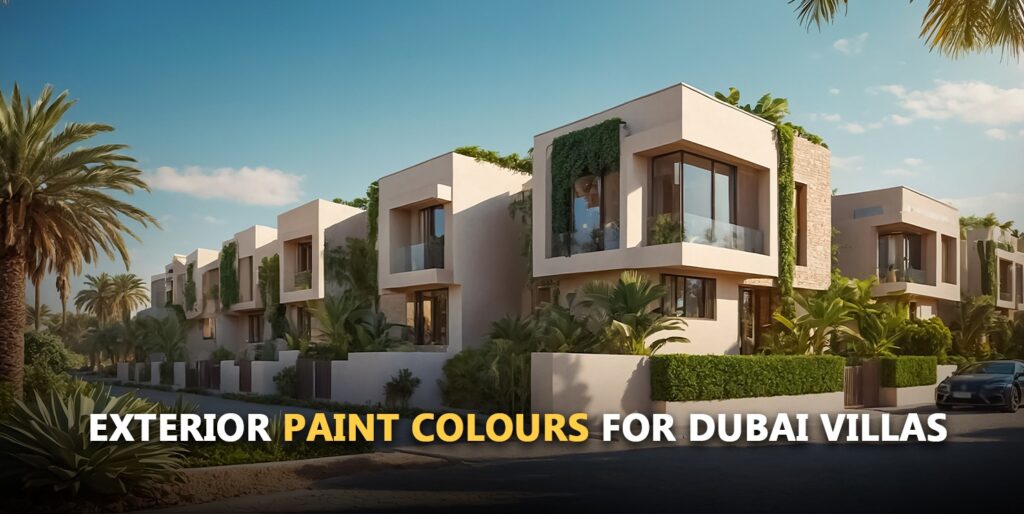
In Dubai, exterior paint is not only about appearance. Your villa’s façade deals with intense sunlight, airborne dust, humidity and high temperatures throughout the year. A colour that looks elegant during handover can begin fading unevenly within a few summers if the wrong paint type or shade is used.
Choosing the right exterior villa paint Dubai homeowners can rely on requires practical thinking alongside design preferences. The colour you choose can affect surface temperature, maintenance frequency and even how clean the villa looks between washes. In communities such as Emirates Hills, Jumeirah Golf Estates and The Springs, exterior appearance also influences property value and neighbourhood approval standards. If you are planning a villa renovation, understanding how paint performs in Dubai’s climate can help you avoid frequent repainting and long-term repair costs.
Why Exterior Colour Is More Than A Style Choice In Dubai
Dubai’s climate exposes villa exteriors to conditions that are far harsher than many other cities. During peak summer afternoons, external wall surfaces can become extremely hot, particularly on west-facing façades.
This becomes noticeable in older villas across areas such as Arabian Ranches and Mirdif where darker exterior paints often begin showing patchy fading faster than neutral tones. In some cases, homeowners repaint sections of the villa long before the structure itself requires renovation.
Exterior paint colour directly affects:
Heat Retention:
Dark shades absorb more solar heat. Villas painted in charcoal grey or deep brown often experience hotter wall surfaces compared to lighter sand-based colours.
Dust Visibility:
Bright white finishes may initially appear modern but tend to show dust streaks quickly after sandstorms, especially in open villa communities near desert-facing roads.
Long-Term Appearance:
Uneven fading becomes more visible on highly saturated colours. This can make even newer villas appear poorly maintained within a few years.
Community Compliance:
Several Dubai villa communities only allow approved exterior palettes to maintain architectural consistency.
How Dubai Sunlight Affects Paint Over Time
The combination of UV radiation, heat and humidity gradually breaks down paint pigments. This process is particularly aggressive on façades exposed to direct afternoon sunlight.
Warm Tones Vs Cool Tones Over Five Years
Some colours naturally perform better in Dubai conditions than others.
Warm Earthy Shades:
Colours such as sandy beige, muted clay and light taupe generally age more evenly because they blend naturally with Dubai’s desert environment. Villas in Al Barari and Nad Al Sheba often use these palettes because they remain visually consistent even after years of exposure.
Bright White Finishes:
Pure white façades may look striking initially but often develop visible dust staining and yellowing. This is especially noticeable on villas near construction zones or high-traffic roads.
Dark Grey And Charcoal:
These colours absorb higher levels of heat. In many cases, they also make hairline render cracks more visible over time. South-facing walls are usually affected first.
Blues And Greens:
Deep blue and green pigments tend to fade faster under strong UV exposure. While these shades are sometimes used for accent details, applying them across large exterior surfaces usually increases maintenance requirements.
This is why many contractors recommend practical neutral palettes over trend-based colour schemes.
The Safest Colour Palettes For Dubai Villas
If your goal is durability and lower maintenance, neutral exterior shades remain the safest option for most Dubai villas.
When discussing the best exterior paint colors Dubai heat conditions can handle effectively, renovation specialists usually recommend colours that reflect sunlight while still concealing dust and surface wear.
Sandy Whites
Sandy whites remain one of the most common choices across premium villa communities in Dubai.
Unlike stark white paint, these shades:
- Hide dust more effectively
- Reflect sunlight efficiently
- Create a softer exterior appearance
- Require fewer visible touch-ups
They are commonly seen in:
- Emirates Hills
- Dubai Hills Estate
- The Meadows
- Jumeirah Park
Warm Neutrals
Warm greige, beige and stone-inspired shades are popular because they balance modern design with practicality.
These colours work well with:
- Travertine cladding
- Natural stone finishes
- Wooden exterior accents
- Contemporary Arabic architecture
They also maintain resale appeal because they rarely look outdated.
Earthy Desert Tones
Muted sand and clay-inspired palettes suit Mediterranean and Arabic-style villas particularly well. These tones visually blend with Dubai’s environment and generally age more naturally compared to cooler colour palettes.
Colours That Can Help Keep Walls Cooler
Exterior colour can influence how much heat your villa absorbs during summer.
Lighter reflective colours help reduce surface heat build-up compared to darker finishes. In practical terms, this means external walls may stay noticeably cooler during peak afternoon hours.
Colours That Reflect More Heat
- Soft beige
- Off-white
- Pale sandstone
- Light greige
- Warm ivory
These colours are commonly used in communities such as Tilal Al Ghaf where modern villa designs still prioritise heat management.
Colours That Absorb More Heat
- Black
- Navy blue
- Dark charcoal
- Deep brown
- Forest green
Dark modern façades may look visually striking but often require more maintenance in Dubai’s climate due to faster fading and higher surface temperatures.
While paint colour alone will not dramatically lower indoor temperatures, it contributes to overall thermal performance when combined with proper insulation and waterproof exterior systems.
Surface Preparation Matters More Than Most Homeowners Realise
Many exterior paint problems in Dubai happen because underlying wall damage was ignored before repainting.
A villa may look freshly painted initially, only for bubbling or peeling to appear within one or two summers because moisture issues were never resolved properly.
Before repainting, surfaces should always be checked for:
- Hairline cracks
- Render separation
- Water seepage
- Salt deposits
- Previous paint failure
This is particularly important in older Jumeirah villas where long-term sun exposure and coastal humidity can weaken exterior render over time.
Before applying exterior finishes, Wahat Babil handles crack repair, render correction and waterproofing to ensure the paint system performs properly under Dubai’s weather conditions. Addressing these structural issues first helps extend paint lifespan significantly.
Which Dubai Communities Have Exterior Colour Rules?
Several Dubai communities regulate exterior paint colours to preserve neighbourhood appearance and property values.
Communities with stricter façade guidelines often include:
- Emirates Hills
- Palm Jumeirah
- Jumeirah Islands
- The Springs
- Dubai Hills Estate
For example, homeowners in The Springs are typically expected to remain within approved neutral colour palettes rather than introducing bold modern contrasts.
How To Check Before Repainting
Before starting your villa exterior renovation:
- Review your community guidelines carefully.
- Confirm whether colour approval is required.
- Speak with your facilities management team.
- Ask your contractor if they have experience within your specific community.
Skipping approvals may result in repainting requests or project delays later.
Is it cheaper to pay for good paint now or repaint every 3 years?
In Dubai, lower-cost paint systems often become more expensive long term because repainting cycles happen faster.
Cheaper exterior coatings usually fail earlier due to:
- UV fading
- Chalking
- Surface cracking
- Dust staining
Premium paints generally provide:
- Better colour stability
- Stronger UV resistance
- Improved waterproofing performance
- Longer maintenance cycles
This becomes especially relevant for homeowners planning facade renovation Dubai 2026 projects where durability and long-term appearance directly affect property value.
A higher upfront investment often reduces future repainting and repair expenses significantly.
Conclusion
Choosing the right exterior paint for a Dubai villa requires more than selecting a colour that looks attractive on a sample board. Heat exposure, UV resistance, dust visibility and community regulations all influence how well a paint system performs over time. Neutral desert-inspired palettes usually provide the best balance between appearance, durability and maintenance.
For homeowners planning exterior renovations, Wahat Babil approaches villa painting as part of a larger façade improvement process. By handling surface repairs, waterproofing and preparation before painting begins, the focus remains on creating finishes that continue performing well under Dubai’s demanding climate conditions.