


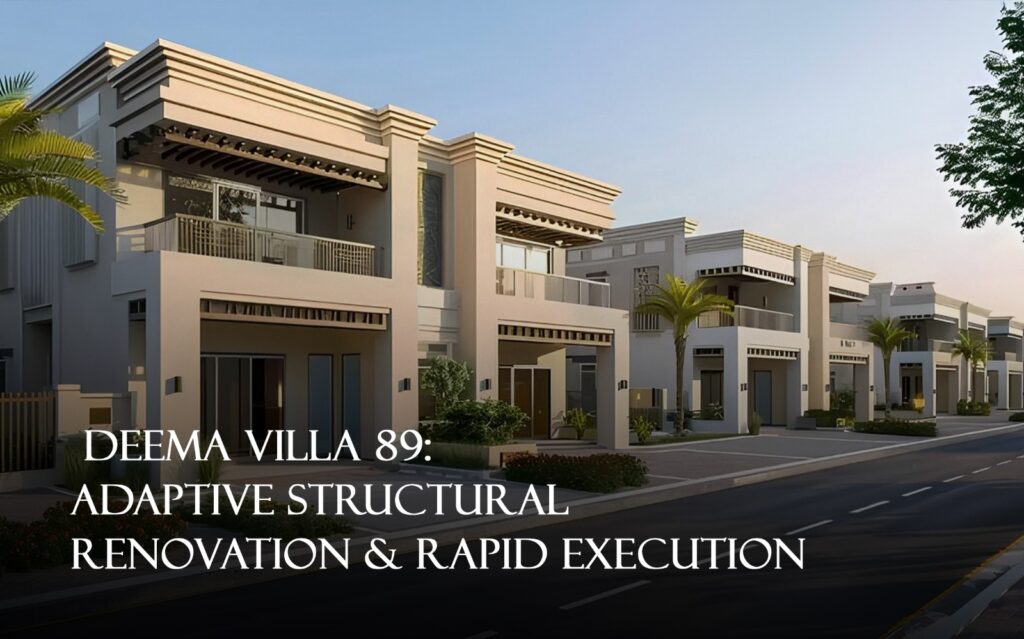
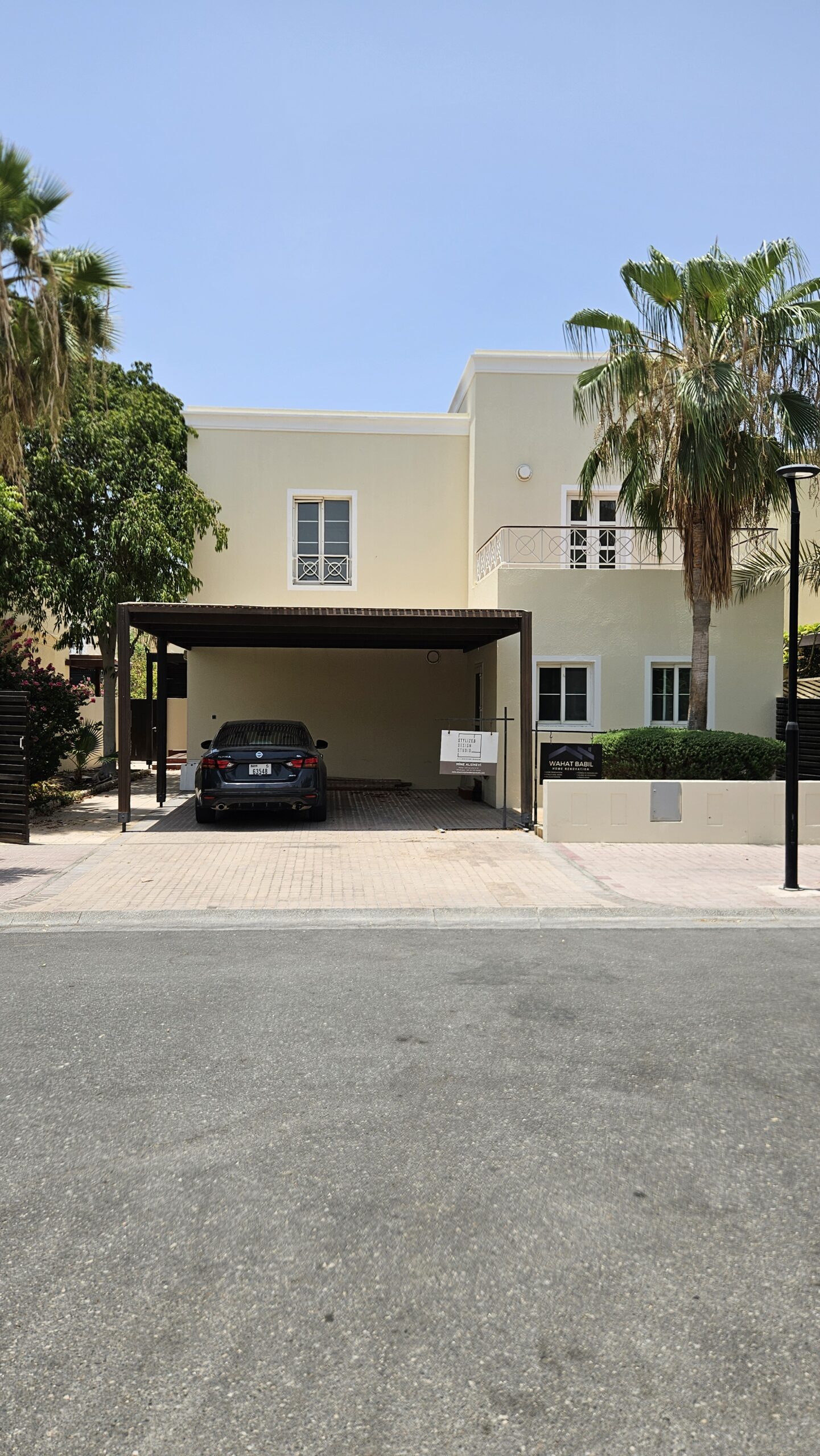
Project Name: Deema Villa 89 — Complete Renovation & Structural Extension
Location: Deema, Dubai
Project Type: Full Villa Renovation with Structural Extension
Commenced: June 2025
Completed: October 2025 (4 Months)
The Scope: End-to-End Transformation
The renovation encompassed virtually every discipline of construction and fit-out, requiring seamless coordination across multiple specialist trades simultaneously:
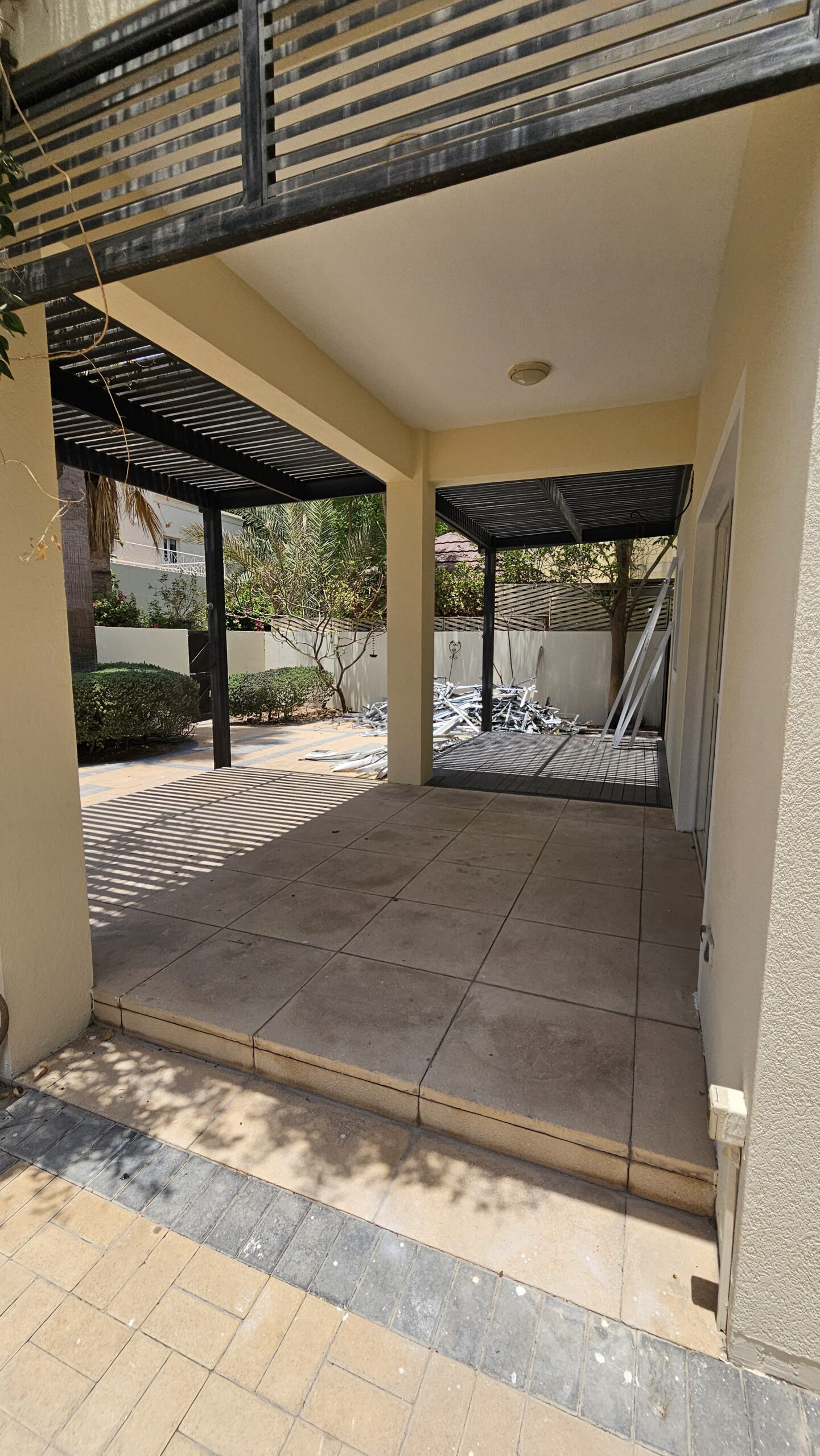
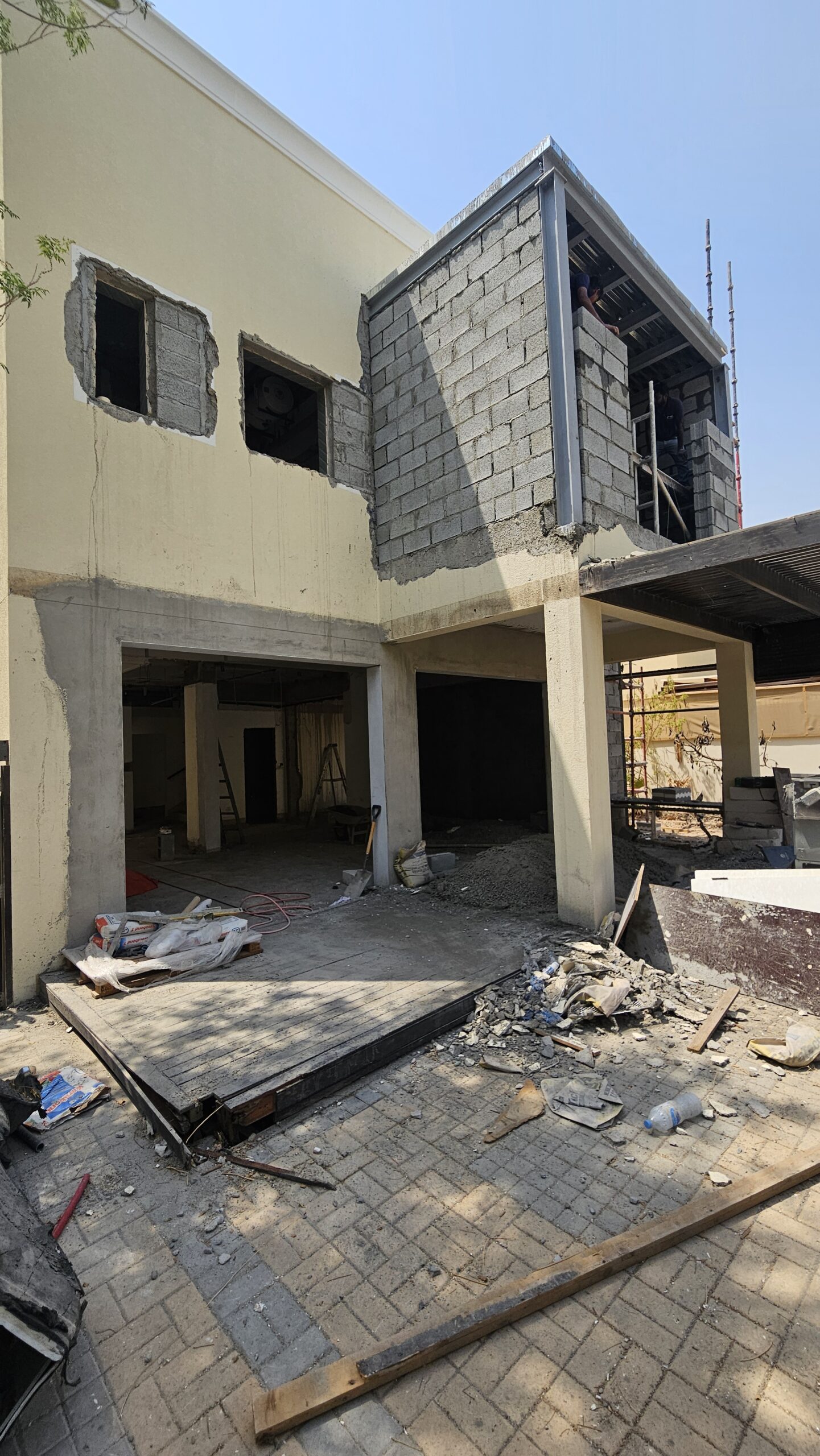
Structural Extension
Engineering assessments were conducted to verify foundation load capacity before extending the villa’s footprint. New structural elements were designed for seamless visual and material continuity with the existing build, with thermal expansion joints engineered to prevent cracking over time. All works were submitted for and received regulatory approvals from Dubai Municipality and community management.
Complete Bathroom Remodelling
Every bathroom was stripped back and rebuilt with comprehensive waterproofing using tanking systems, vapor barriers for humidity management, marine-grade substrates, and modern water-efficient fixtures. Proper ventilation sizing was specified for each space to manage Dubai’s humidity effectively.
Full HVAC Replacement
A complete Variable Refrigerant Flow (VRF) HVAC system was installed to handle Dubai’s extreme summer temperatures. Smart zoning was incorporated for independent room-by-room temperature control, paired with enhanced insulation to reduce cooling loads and operating costs.
Electrical Infrastructure Overhaul
The villa was fully rewired with upgraded distribution boards, modern switches and dimmer-compatible fixtures, surge protection for electronics, and load calculations future-proofed for EV charging. Contemporary outlets were installed throughout to meet modern usage demands.
Interior Refinishing & Custom Joinery
Climate-appropriate materials were selected throughout — low-VOC paints, thermal-stable flooring, and humidity-resistant joinery substrates. Custom cabinetry and storage solutions were pre-fabricated off-site to exact specifications for rapid and precise installation.
Design Changes & On-Site Discrepancies
The most defining challenge of Deema Villa 89 was not the timeline — it was what emerged when the construction team arrived on site. As is common in older villa communities, the actual on-site conditions diverged meaningfully from what the original drawings showed. Structural positions, service routes, cavity dimensions, and load-bearing elements all presented variances that could not have been anticipated from the plans alone.
At the same time, as the renovation progressed and the homeowners saw their villa taking shape, their vision evolved. Design refinements, material upgrades, and layout adjustments were requested mid-project — a natural and understandable part of any ambitious renovation. The risk in such situations is well known: scope changes on a compressed timeline can cascade into delays, cost overruns, and compromised quality.
temperature-tolerant cells maximizing yields.
Strict Community Regulations
Deema’s community management enforces a rigorous set of operational rules: restricted working hours, noise curfews, prescribed delivery windows, and structured waste removal schedules. These are non-negotiable — violations carry consequences for the client. Every working day had a defined window, and no amount of urgency could extend it.
Dubai’s Summer Climate
A June start in Dubai means confronting extreme heat from day one. Peak summer temperatures affect material storage, concrete curing times, adhesive setting, and critically, worker safety and productivity. Mandatory rest periods during peak heat hours are a legal and moral requirement — and a reality that had to be absorbed into every daily schedule without compromise.
How We Delivered: Strategy, Precision, and Collaboration
Redesigning in Real Time — With the Client
When on-site conditions diverged from drawings, the Wahat Babil team did not wait for formal revision cycles. Site managers, engineers, and the client were brought into an immediate collaborative process. Revised drawings were produced rapidly, alternatives were presented with transparent trade-off analysis, and decisions were made jointly. The client was not an obstacle to resolution — they were part of it.
Where the client’s design preferences evolved, Wahat Babil treated each change as an input to be accommodated, not a problem to be managed around. This approach — transparent, responsive, and client-centric — kept trust intact and decisions moving throughout the project
Increased Manpower, Precisely Deployed
To recover time absorbed by design iterations and on-site problem solving, Wahat Babil scaled up workforce deployment strategically. Rather than simply adding bodies to site, specialists were allocated by zone and discipline:
• Dedicated electrical teams working concurrently across separate villa sections
• Parallel plumbing crews accelerating rough-in and fit-out simultaneously
• A focused HVAC installation team working independently of other trades
• Specialist waterproofing teams in bathrooms ensuring zero compromise on integrity
• Finishing crews following immediately behind rough trades to compress the schedule review.
Zone-Based Work Division
The villa was divided into clearly defined work zones, each with its own team, progress targets, and quality checkpoints. This prevented trades from blocking one another and ensured that no single area became a bottleneck. Progress across all zones was tracked daily, with sequencing continuously adjusted to maintain momentum. your current property is costing you—and how much you could be saving.
Work Assignment Based on Time of Day
Community regulations defined the clock; Wahat Babil defined the rhythm within it. Work was assigned by noise impact and precision requirements across the available daily window:
• Morning hours: High-noise demolition, breaking, and structural works
• Midday periods: Precision trades — electrical terminations, fixture setting, tiling
• Afternoon sessions: HVAC installation, ductwork, and systems testing
• Final allowable hours: Quiet finishing activities — painting, joinery installation, snagging
Daily morning briefings aligned all trades on priorities, while afternoon reviews identified and resolved emerging issues before they could cascade. Pre-fabrication of joinery, pre-wiring of electrical panels, and pre-cutting of HVAC ductwork further compressed installation time without reducing quality.
The Outcome: Delivered in Four Months
Deema Villa 89 was handed over on schedule — completely transformed in four months, despite mid-project design revisions, on-site condition variances, community regulation constraints, and a Dubai summer. The completed villa delivered:
- A structurally extended footprint with modern spatial flow and seamless indoor-outdoor connectivity
- Fully waterproofed, beautifully appointed bathrooms built for Dubai’s humidity demands
- A high-performance VRF HVAC system delivering consistent comfort and reduced utility costs
- A future-ready electrical infrastructure with abundant capacity and surge protection throughout
- Contemporary interiors finished with climate-appropriate, durable materials across every surface
Most importantly, the homeowners received exactly what they envisioned — not a compromise shaped by time pressure, but a home built to their evolving brief, with every change accommodated and every quality standard met.
Why Wahat Babil
Deema Villa 89 is a demonstration of what Wahat Babil brings to every project: the technical depth to solve problems as they arise, the organisational capability to run complex multi-trade programmes without losing momentum, and the client partnership that ensures the final result is always what the homeowner truly wanted.
Dubai’s villa communities demand a contractor who understands the regulations, respects the neighbours, masters the climate, and delivers without excuses. That is the Wahat Babil standard — on every project, within every timeline.