


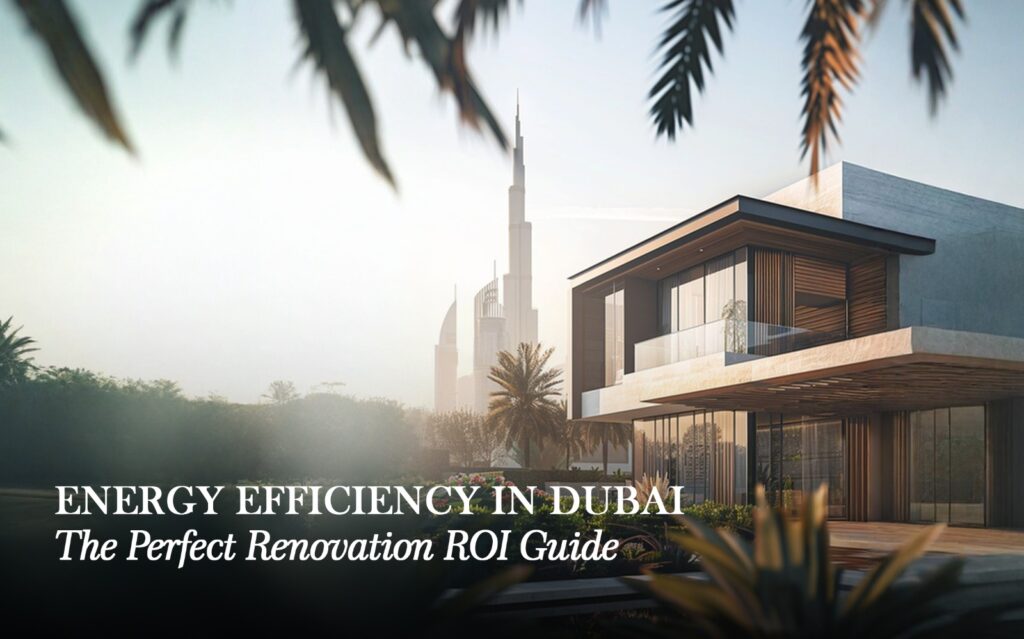
The residential landscape of the United Arab Emirates is navigating a profound transition from unconstrained utility consumption toward structured demand-side management. This shift emphasizes retrofitting existing buildings to mitigate environmental and fiscal pressures of rapid urbanization.
For homeowners and real estate investors, the technical and economic argument for energy-focused renovation has never been more compelling. As utility tariffs evolve into increasingly punitive slab-based systems, a residence’s capacity to function as a self-sustaining “savings machine” becomes a primary determinant of its long-term asset value and operational viability.
Understanding DEWA's Slab-Tariff Ecosystem
The utility environment in Dubai operates as a highly regulated slab-tariff ecosystem designed to incentivize conservation by applying progressively higher rates to higher consumption volumes.
Electricity Consumption Tiers:
- Lower consumption brackets receive favorable base rates
- As monthly usage increases, households move into higher-cost slabs
- Peak summer consumption frequently triggers premium rates representing substantial unit cost increases
- Every kilowatt-hour saved is valued at the “marginal rate” of the highest slab, not the base rate
Water Billing Structure:
- Similarly tiered system with escalating costs at higher consumption levels
- Complicated by variable fuel surcharges fluctuating with global energy prices
- Dubai Municipality sewerage fees undergoing phased increases
Additional Levies:
- Fuel surcharges on both electricity and water
- Value-added tax on consumption
- Dubai Municipality Housing Fee (percentage of annual rent for tenants, calculated on RERA rental index for owners)
This tiered structure creates dramatic financial differences. A non-optimized villa operating in premium slabs pays significantly more per unit than a renovated, high-performance home remaining within lower brackets.
Advanced Air Conditioning Optimization: The Core Savings Engine
In Dubai’s hyper-arid climate, air conditioning is the single most significant electricity consumer, typically accounting for the majority of a household’s annual energy budget.
Critical Distinction: DEWA Electricity vs. District Cooling
Before implementing AC optimization strategies, homeowners must understand their cooling infrastructure:
- DEWA-Powered Traditional AC: Property owner pays only for electricity consumed by the AC system based on slab tariffs
- District Cooling (Empower, Tabreed): Property owner pays both “capacity charges” (fixed fee based on refrigeration ton allocation) and “consumption charges” (variable fee based on actual usage)
This distinction fundamentally changes optimization strategy and ROI calculations.
For Properties with Traditional DEWA-Powered AC
Variable Refrigerant Flow (VRF/VRV) Solutions:
- Historical building practices favored over-sized units causing “short-cycling” and excessive energy consumption
- Modern VRF technology uses inverter compressors to modulate output precisely according to actual cooling load
- Documented installations show dramatic energy consumption reductions with substantial monthly savings during summer peaks
For Properties with District Cooling
Different Cost Structure, Different Strategy:
- Capacity charges are fixed—independent of actual usage
- Consumption charges are variable based on chilled water flow through the system
- Optimization focuses on reducing consumption charges while capacity charges remain constant
Key Strategies:
- Smart FCU Control: Optimizing fan speeds and runtime of Fan Coil Units reduces consumption without affecting capacity charges
- Zone Control: Advanced thermostats ensure FCUs operate only when rooms are occupied
- Envelope Remains Critical: Reducing thermal load means FCUs run less frequently, directly lowering consumption charges
- Equipment Replacement Limited: Unlike DEWA-powered properties, replacing FCUs provides marginal benefit—focus on controls and envelope instead
Universal Smart Climate Control
AI and Machine Learning Integration:
- Geofencing and Occupancy Sensors: Automatically adjust temperature set-points when homes are unoccupied, returning to comfort levels before residents arrive
- Humidity Calibration: In humid coastal areas, smart thermostats prioritize dehumidification, allowing higher (more efficient) temperature set-points without sacrificing comfort
- Advanced Zoning: Motorized dampers in ductwork enable individual room control, preventing energy waste cooling unoccupied spaces
These comprehensive interventions can reduce energy consumption substantially, delivering significant annual savings at current tariff rates.
Building Envelope Integrity: The First Line of Thermal Defense
High-efficiency AC systems are only effective if buildings retain cooled air. In many older Dubai residences, the building envelope is thermally porous, allowing significant heat ingress and air leakage.
Exterior Insulation and Finishing Systems (EIFS)
- EIFS “wraps” entire structures in continuous high-performance insulation layers
- Combined with upgraded roof insulation, total savings can reach significant percentages
- Eliminates thermal mass effects where concrete structures absorb and store heat during the day
Mitigation of Thermal Bridging
- Structural thermal breaks at junction points prevent heat transfer through insulation
- EIFS wrapping of exposed concrete elements isolates them from external heat
- Interventions can dramatically improve effective U-values by ensuring insulation is truly continuous
Glazing and Fenestration: Managing Radiant Heat
High-Performance Glazing:
- Low-Emissivity (Low-E) coatings reflect long-wave infrared energy while allowing visible light through
- Spectrally selective glazing engineered for low Solar Heat Gain Coefficient while maintaining high Light Transmittance
- Electrochromic glass tints dynamically in response to sun intensity, reducing afternoon cooling loads substantially
Thermal Breaks in Window Frames:
- High-performance systems incorporate non-conductive barriers within frames
- Prevents heat conduction, complementing double-glazed unit performance
Water Heating and Solar Energy: Renewable Solutions
Solar Thermal Water Heating
- Flat-plate collectors or evacuated tubes mounted on roofs connected to insulated storage tanks
- Properly sized systems can reduce water-heating energy consumption substantially
- Remarkably short payback periods typically ranging from several years
Solar PV and the Shams Dubai Initiative
Dubai villa owners are increasingly installing Solar PV systems to generate electricity and export surplus back to the grid.
The Shams Dubai Net Metering Program:
- DEWA’s initiative allows rooftop solar panel installation
- Excess electricity generated during peak sunlight hours is exported to the grid
- Owners receive credits offsetting consumption during evening and nighttime hours
System Sizing and ROI:
- PV systems must be sized appropriately to avoid over-generation penalties
- Higher-slab consumers see faster ROI due to marginal rate savings
- Requires DEWA approval, grid-connection compliant inverters, and professional installation by approved contractors
Strategic Advantage:
- Solar PV addresses the electricity portion (the largest utility component)
- Solar thermal addresses water heating specifically
- Combined approach maximizes renewable energy utilization and minimizes grid dependency
Lighting Efficiency and Smart Automation
Complete LED Transition:
- High-quality LEDs consume substantially less energy than traditional bulbs with significantly longer operational lives
Smart Control Systems:
- Occupancy Sensors: PIR or ultrasonic sensors ensure lights are only active when needed
- Daylight Harvesting: Smart sensors detect ambient natural light and automatically dim artificial lighting
- Advanced Protocols (DALI/KNX): Wired backbones allow granular control enabling creation of optimized “scenes”
Appliance Selection and Efficiency Labeling
Star Rating System:
- Refrigerators: Top-rated units can consume substantially less energy than base models—most effective appliance upgrade
- Washing Machines: Premium ratings prioritize water conservation and low-temperature cycles
- Air Conditioners: Top-rated units utilize inverter technology for substantial efficiency improvements
Investment Strategy: Target minimum high star ratings for all major appliances. Lifetime operational savings significantly outweigh initial investment.
Smart Metering and Building Energy Management
Whole-Home Energy Monitoring:
- Systems show exactly which circuits or appliances are consuming power at any given moment
- Identify “phantom loads”—devices drawing power when turned off
- AI-driven automation can automatically dim lights or adjust AC set-points if total home load exceeds thresholds
- Prevents entry into higher utility slabs through intelligent load management
The Renovation Roadmap
Professional Energy Audits:
- Level 1 (Walk-Through): Preliminary assessment of utility bills and obvious inefficiencies
- Level 2 (Detailed Audit): Data logging, equipment inventory, and thermal imaging identifying heat ingress
- Level 3 (Investment-Grade): Comprehensive engineering-grade modeling for major retrofits with detailed ROI analysis
Approvals and Permits:
- No Objection Certificate (NOC): Required from master developers
- Dubai Municipality Approval: Essential for works impacting building footprint or energy rating
- DEWA and Civil Defence: Necessary for changes to electrical load, plumbing, or fire safety systems
Payback and Property Value Appreciation
Simple Payback Period:
- Well-executed AC and lighting optimization typically achieves payback in several years
- Deep retrofits like EIFS have longer payback periods but provide significant comfort and durability benefits
- As utility rates and fuel surcharges continue rising, payback periods will likely shorten
The “Green Premium”:
- Energy-efficient properties command substantial premiums in Dubai real estate market
- Driven by both lower operating costs and perceived quality of high-performance building systems
- In premium villa communities, solar heating and smart automation are essential markers of modern luxury
Your Reliable Energy Efficiency Partner
Transforming a Dubai residence into a high-performance energy asset requires expertise spanning thermodynamics, building physics, regulatory compliance, and smart technology integration. Wahat Babil is your reliable partner for this comprehensive transformation.
Why Wahat Babil?
Complete Technical Expertise: We understand the distinction between DEWA-powered properties and district-cooled communities, tailoring optimization strategies accordingly. Our team engineers complete thermal performance solutions addressing every energy loss pathway.
Regulatory Navigation Excellence: Our established relationships with Dubai Municipality, DEWA, and master developers streamline the entire approval process, ensuring projects move forward without costly delays.
Comprehensive Energy Auditing: Before any renovation begins, we conduct thorough energy audits identifying exactly where your property is losing money. Our thermal imaging, equipment analysis, and consumption modeling pinpoint the highest-ROI interventions.
ROI-Focused Planning: We provide transparent payback period calculations, lifecycle cost analysis, and property value appreciation projections, ensuring every dirham invested delivers measurable returns.
Single-Source Accountability: From initial audit through final commissioning of smart systems, we manage every aspect of your energy transformation. One partner. One point of accountability.
Our Comprehensive Renovation Services:
Once project feasibility is confirmed, our integrated services ensure seamless execution through the following specialized offerings:
- Interior Designing Services: Climate-intelligent material selection, thermal comfort optimization, humidity-resistant finishes, low-VOC specification, cultural integration (modern Majlis design).
- MEP Services (Mechanical, Electrical & Plumbing): Load analysis verifying capacity, HVAC optimization reducing cooling costs 30-60%, smart energy management, DEWA compliance, plumbing upgrades.
- Ceiling Works: Thermal break integration, moisture-resistant materials, proper insulation reducing AC loads, acoustic optimization.
- Home Renovation Services: Comprehensive transformations, phased renovation preventing decision fatigue, regulatory compliance, project management concept-through-completion.
- Villa Renovation Services: Large-scale residential upgrades, EIFS installation, marine-grade specifications for coastal properties, movement joint engineering.
- Bathroom Renovation: Proper waterproofing preventing hidden mold, vapor barrier installation, humidity-resistant materials, ventilation sizing for moisture management.
- Kitchen Renovation: Climate-resilient cabinetry (marine-grade plywood), engineered wood preventing warping, advanced ventilation, thermal-efficient appliance integration.
- Structural Villa Extension: Thermal expansion joint design, matching CTE values between new and existing construction, foundation engineering for sandy soil, Al Safat compliance.
- AC Services (Maintenance, Repair & Installation): System sizing for Dubai’s extreme loads, energy-efficient equipment, thermal envelope optimization reducing capacity requirements, preventive maintenance.
- Painting Works: Low-VOC/Zero-VOC formulations, UV-resistant exterior coatings, heat-reflective paints reducing surface temperatures, proper substrate preparation.
- Tiling Works: Movement joint placement every 40 square meters, polymer-modified mortars for thermal cycling, porcelain with appropriate CTE, proper adhesive for temperature differentials.
The Wahat Babil Advantage
Holistic System Thinking: We understand that building envelopes, HVAC (whether traditional or district cooling), solar systems, lighting, and controls must work as an integrated system. We recognize that district-cooled properties require fundamentally different optimization strategies than DEWA-powered homes.
Future-Proof Investments: As Dubai’s sustainability regulations become increasingly stringent and utility tariffs continue rising, we design renovations that remain compliant and cost-effective for decades.
Transparent Performance Guarantees: We provide clear projections of energy consumption reductions and utility bill savings. Post-completion, we verify actual performance against projections, ensuring your investment delivers promised returns.
Property Value Maximization: Beyond operational savings, we position your property to capture the growing “green premium” in Dubai’s real estate market.
Engineering a Sustainable Future
The transformation of a Dubai residence into a high-performance energy asset addresses the building envelope, optimizes HVAC systems, and integrates intelligent controls. Property owners can effectively “immunize” themselves against rising utility costs and the penalties of slab-based tariffs.
Beyond immediate fiscal benefits, these renovations contribute to national carbon neutrality goals while simultaneously enhancing comfort, health, and market value. In the context of Dubai’s evolving urban environment, the “savings machine” is the hallmark of a resilient and forward-thinking residential property.
Ready to transform your Dubai property into a high-performance energy asset? Partner with Wahat Babil for comprehensive energy efficiency renovation that delivers measurable savings, enhanced comfort, and lasting value. Contact us today to begin your journey toward thermal excellence and utility independence.