


The Invisible Shield Against Desert Heat
In Dubai’s relentless climate where summer temperatures soar past 50°C and air conditioning accounts for up to 70% of energy consumption, your windows represent either your strongest defense or your weakest vulnerability. The difference? A technical specification most homeowners have never heard of: the U-Value.
U-Value measures how effectively your windows resist heat transfer—the lower the number, the better your protection. Premium high-performance windows with optimized U-Values can slash cooling costs by 30% or more, transforming energy-draining glass walls into intelligent climate barriers. Yet most Dubai villas suffer with inefficient glazing systems that silently cost thousands of dirhams annually while failing to protect against heat, dust, and humidity.
This guide reveals the technical secrets behind high-performance windows engineered specifically for Dubai’s extreme environment, and why understanding U-Values represents your first step toward genuine energy efficiency and comfort.
Understanding U-Value: The Heat Transfer Metric That Matters
What U-Value Actually Measures
U-Value quantifies the rate of heat transfer through a building element—in this case, your window assembly including both frame and glazing. Expressed in watts per square meter per degree Kelvin (W/m²K), it indicates how much heat energy passes through the window for each degree of temperature difference between inside and outside.
The Lower, The Better:
- High U-Value (>2.0 W/m²K): Poor insulation, rapid heat transfer, high energy waste
- Medium U-Value (1.8-2.0 W/m²K): Acceptable but not optimal performance
- Low U-Value (0.8-1.8 W/m²K): Excellent insulation, minimal heat transfer, maximum efficiency
- Ultra-Low U-Value (<0.8 W/m²K): Premium performance, cutting-edge technology
Why U-Value Matters in Dubai
Dubai’s extreme temperature differentials—often 30-35°C between air-conditioned interiors (22°C) and scorching exteriors (50°C+)—create massive heat transfer potential. Windows with high U-Values essentially function as thermal highways, constantly pumping exterior heat into your villa despite powerful AC systems working to remove it.
Financial Impact: Poor windows (U-Value 3.0+) can increase cooling costs by 40-60% compared to high-performance alternatives (U-Value 1.2). For a typical luxury villa, this translates to AED 5,000-15,000 in unnecessary annual energy costs.
The Six Attributes of High-Performance Windows
1. Low U-Value: The Foundation of Thermal Performance
Target Specification: Optimal Dubai performance requires U-Values between 0.8-1.8 W/m²K for the complete window assembly including frame and glazing.
Why This Matters: Windows exceeding 2.0 W/m²K represent thermal liabilities—they allow excessive heat ingress forcing AC systems to work harder, run longer, and consume dramatically more electricity. In Dubai’s climate, this inefficiency compounds daily for 8-9 months annually.
Performance Impact: Upgrading from standard windows (U-Value 2.5) to high-performance glazing (U-Value 1.2) can reduce cooling loads by 25-30%, delivering measurable monthly savings on DEWA bills while improving interior comfort.
2. Low-E (Low-Emissivity) Coatings: The Invisible Heat Reflector
Technical Function: Low-E coatings consist of microscopically thin metallic layers—typically silver oxide—applied to glass surfaces. These coatings reflect infrared radiation (heat) while allowing visible light to pass through, creating one-way thermal barriers.
The Dubai Application: In Dubai’s intense sunlight, Low-E coatings reduce Solar Heat Gain Coefficient (SHGC) to below 0.25, meaning less than 25% of solar energy penetrates the glass. This blocks heat without darkening interiors or obstructing views—the “secret” to comfortable glass-walled living rooms and floor-to-ceiling windows.
Coating Placement:
- Surface 2 (room-side of exterior pane): Optimal for hot climates like Dubai—reflects summer heat outward
- Surface 3 (exterior-side of interior pane): Additional coating for maximum performance
- Double Low-E: Premium installations use coatings on multiple surfaces for superior control
Cost-Benefit: Low-E coatings add 15-25% to window costs but deliver 20-30% energy savings, typically achieving payback within 3-5 years while providing decades of benefit.
3. Thermal Breaks in Frames: Stopping Conduction Through Metal
The Problem: Aluminum frames—popular in Dubai for their sleek appearance and durability—conduct heat exceptionally well. Without thermal breaks, aluminum frames become “thermal bridges” transferring heat directly from hot exteriors to cool interiors, bypassing even the best glazing.
The Solution: Thermal breaks consist of low-conductivity materials (typically polyamide or reinforced nylon) inserted between interior and exterior aluminum sections, physically interrupting heat flow paths.
Dubai-Specific Benefits:
- Prevents frame condensation during high-humidity periods
- Maintains low U-Values despite metal construction
- Combines aesthetics (slim aluminum profiles) with performance
- Resists dust and sand accumulation in frame channels
Quality Indicators: Premium thermal break systems feature 20-35mm polyamide sections—wider breaks deliver better insulation. Budget systems use 10-15mm breaks offering minimal benefit.
4. Multi-Layer Glazing: Trapping Air for Insulation
Configuration Options:
Double Glazing (Standard):
- Two glass panes separated by 12-16mm air/gas space
- U-Values: 1.6-2.0 W/m²K with air, 1.2-1.6 W/m²K with argon
- Cost-effective baseline for Dubai applications
Triple Glazing (Premium):
- Three panes with two insulating cavities
- U-Values: 0.8-1.2 W/m²K
- Significant improvement but higher cost and weight
- Requires robust frame systems
Vacuum Insulated Glazing (VIG – Ultra-Premium):
- Near-vacuum between panes (0.1-0.2mm gap)
- U-Values: 0.4-0.6 W/m²K
- Cutting-edge technology for extreme performance
- Slim profile despite superior insulation
Gas Fills: Inert gases between panes enhance insulation beyond air:
- Argon: Standard upgrade, 20-30% better than air
- Krypton: Premium option, 30-40% better than air
- Gas lifespan: 20+ years in quality seals
Performance Boost: Multi-layer glazing reduces U-Values by 40-60% compared to single pane, while gas fills add another 15-25% improvement.
5. Air Tightness & Seals: The Dust and Humidity Barrier
Critical in Dubai’s Environment: Dubai’s pervasive dust storms and high humidity make air infiltration particularly problematic. Gaps around windows allow dust, humid air, and heat to bypass glazing systems entirely, undermining thermal performance.
Sealing Systems:
EPDM Gaskets:
- Ethylene Propylene Diene Monomer rubber seals
- Superior weather resistance and longevity
- Maintains flexibility in extreme temperatures
- 25+ year lifespan in Dubai conditions
Multi-Point Locking:
- 5-9 locking points around window perimeter
- Compresses seals uniformly for complete closure
- Prevents warping and gap formation
- Enhances security as bonus benefit
Airtightness Classification:
- Class 4: Highest standard, <0.5 m³/h/m² air leakage
- Essential for Dubai’s dust and climate control needs
- Maintains effective U-Value over decades
Long-Term Impact: Poor seals increase effective U-Value by 30-50% over time as gaps develop, transforming efficient windows into energy wasters. Quality sealing systems maintain performance for 20-30 years.
6. Durability & Resistance: Built for Desert Extremes
Material Requirements for Dubai:
Corrosion Resistance:
- Powder-coated aluminum resisting salt air corrosion
- Marine-grade stainless steel hardware
- UV-stable gaskets and seals
- Anodized finishes for long-term protection
Structural Strength:
- Wind load rating ≥3.5 kN/m² (Class 5)
- Reinforced frames for large glazing areas
- Tempered or laminated safety glass
- Impact resistance for sandstorm protection
Sand and Dust Adaptation:
- Self-cleaning glass coatings
- Sealed drainage channels preventing accumulation
- Easy-clean surfaces requiring minimal maintenance
- Protected hardware preventing grit infiltration
Why Durability Affects U-Value: Windows degrading from environmental exposure lose thermal performance. Warped frames create gaps, damaged seals allow infiltration, and compromised coatings reduce efficiency. Dubai-rated durability maintains U-Values throughout 25-30 year service life.
Bonus Performance Features: Beyond Basic U-Value
Acoustic Insulation: The Comfort Multiplier
Sound Transmission Class (STC) Rating: Premium windows achieve STC ≥35 dB, reducing external noise by 90%+. In Dubai’s urban environment with construction activity, traffic, and aviation noise, acoustic performance transforms living quality.
Dual Benefit: Acoustic laminated glass and tight sealing that blocks sound also prevents air infiltration, indirectly supporting thermal performance while delivering quiet interiors.
Security Enhancement: Protection with Efficiency
Laminated Glass Benefits:
- Impact resistance against break-ins
- Safety protection if glass breaks
- UV filtration protecting furnishings
- Enhanced structural integrity supporting large spans
Integrated Security: Multi-point locks and reinforced frames provide security without compromising thermal performance—demonstrating how premium windows deliver multiple benefits simultaneously.
The Dubai Perspective: Climate-Specific Window Strategy
Why Standard Windows Fail in Dubai
International window specifications designed for temperate climates fail spectacularly in Dubai’s extreme environment. European standards target winter heating efficiency; Dubai requires summer cooling optimization. The priorities are inverted.
Dubai-Specific Challenges:
Extreme Solar Exposure:
- 3,500+ annual sunshine hours
- Intense UV radiation year-round
- Direct solar gain through glass overwhelming AC capacity
- Heat soak in frames radiating indoors hours after sunset
Temperature Extremes:
- 50°C+ exterior surfaces in direct sun
- 35°C+ temperature differentials across glass
- Thermal expansion/contraction stressing seals and frames
- Year-round cooling demand (no seasonal reversal)
Environmental Stressors:
- Sandstorms abrading glass and coating surfaces
- High humidity cycles (60-80% winter nights)
- Salt air corrosion near coastal areas
- Pervasive dust infiltration through any gap
Optimized Window Specifications for Dubai
Ideal Performance Targets:
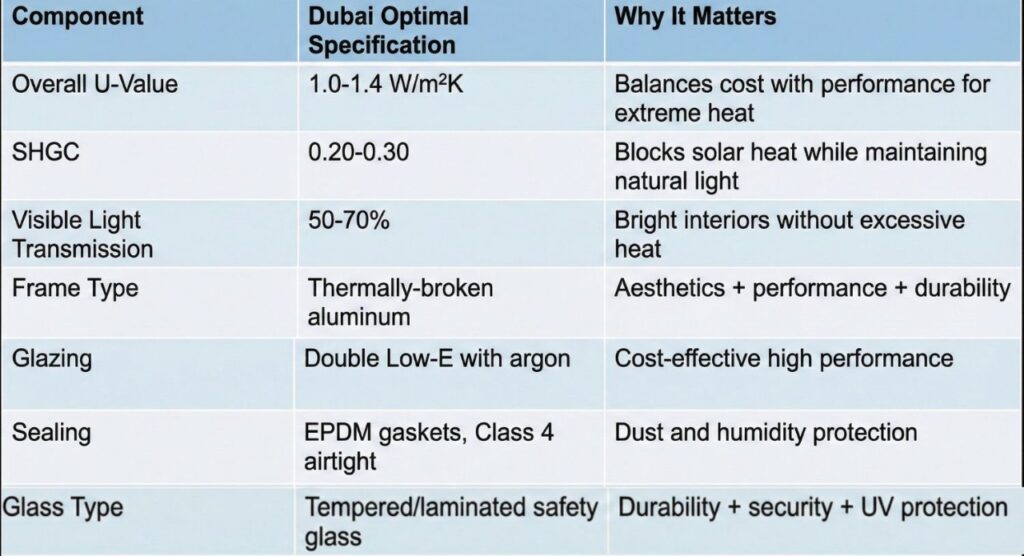
Premium Upgrades: For ultra-luxury villas or extreme performance requirements, triple glazing with krypton fills and VIG technology achieve U-Values below 0.8 W/m²K—the ultimate defense against Dubai’s climate.
Return on Investment Analysis
Energy Savings Calculation: A typical 5,000 sq ft Dubai villa with 800 sq ft of glazing upgrading from standard (U-Value 2.5) to high-performance (U-Value 1.2) windows:
- Annual cooling load reduction: 25-30%
- DEWA savings: AED 8,000-12,000 annually
- Premium window cost increase: AED 40,000-60,000
- Payback period: 4-6 years
- 25-year savings: AED 200,000-300,000
Additional Benefits: Beyond direct energy savings, high-performance windows deliver improved comfort, reduced HVAC system wear (extending equipment life), better UV protection for furnishings, and increased property value—benefits that don’t appear in simple payback calculations but significantly enhance living quality and investment return.
Investing in Invisible Performance
High-performance windows represent invisible infrastructure—technology you don’t see but experience every moment you’re home. The difference between standard and optimized glazing isn’t aesthetic; it’s the comfort of consistent temperatures, the relief of lower energy bills, and the peace of knowing your villa is protected against Dubai’s extreme climate.
Key Takeaways
✓ U-Value measures thermal performance—lower numbers mean better insulation and efficiency
✓ Target 0.8-1.8 W/m²K for optimal Dubai performance balancing cost and benefit
✓ Low-E coatings are essential—blocking solar heat while maintaining natural light
✓ Thermal breaks prevent conduction—necessary in aluminum frames for true efficiency
✓ Multi-layer glazing with gas fills dramatically improves insulation beyond single panes
✓ Airtight seals protect long-term—maintaining performance against dust and humidity
✓ Dubai-specific durability matters—standard windows fail quickly in extreme conditions
✓ ROI typically achieved in 4-6 years—with decades of continued savings
✓ Comprehensive renovation expertise—ensures proper installation and system integration
Partner with Window Performance Experts
Wahat Babil Construction brings technical expertise and installation excellence to window upgrades, ensuring your investment delivers maximum performance, comfort, and long-term value in Dubai’s challenging climate.
Ready to transform your villa’s energy efficiency?
Contact Wahat Babil through our contact page to discuss high-performance window solutions tailored to your specific needs and climate challenges.